
Practical learning
Farm & field
One hundred and ten acres where the syllabus gets tested. Students plan, sow, manage and harvest their own plots, season after season.
The land
Main farm
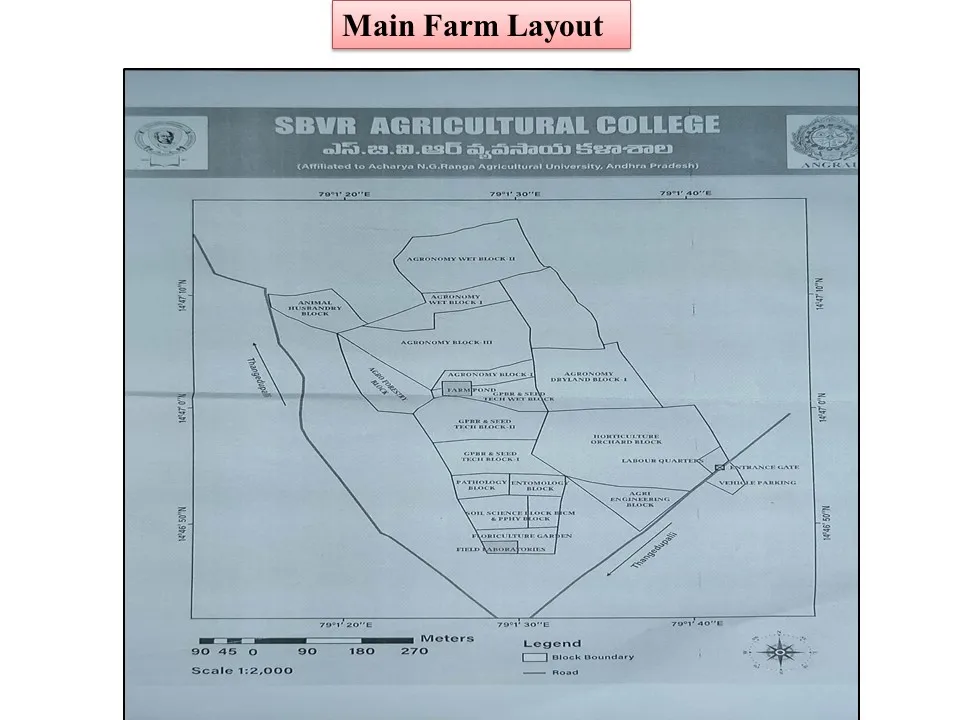
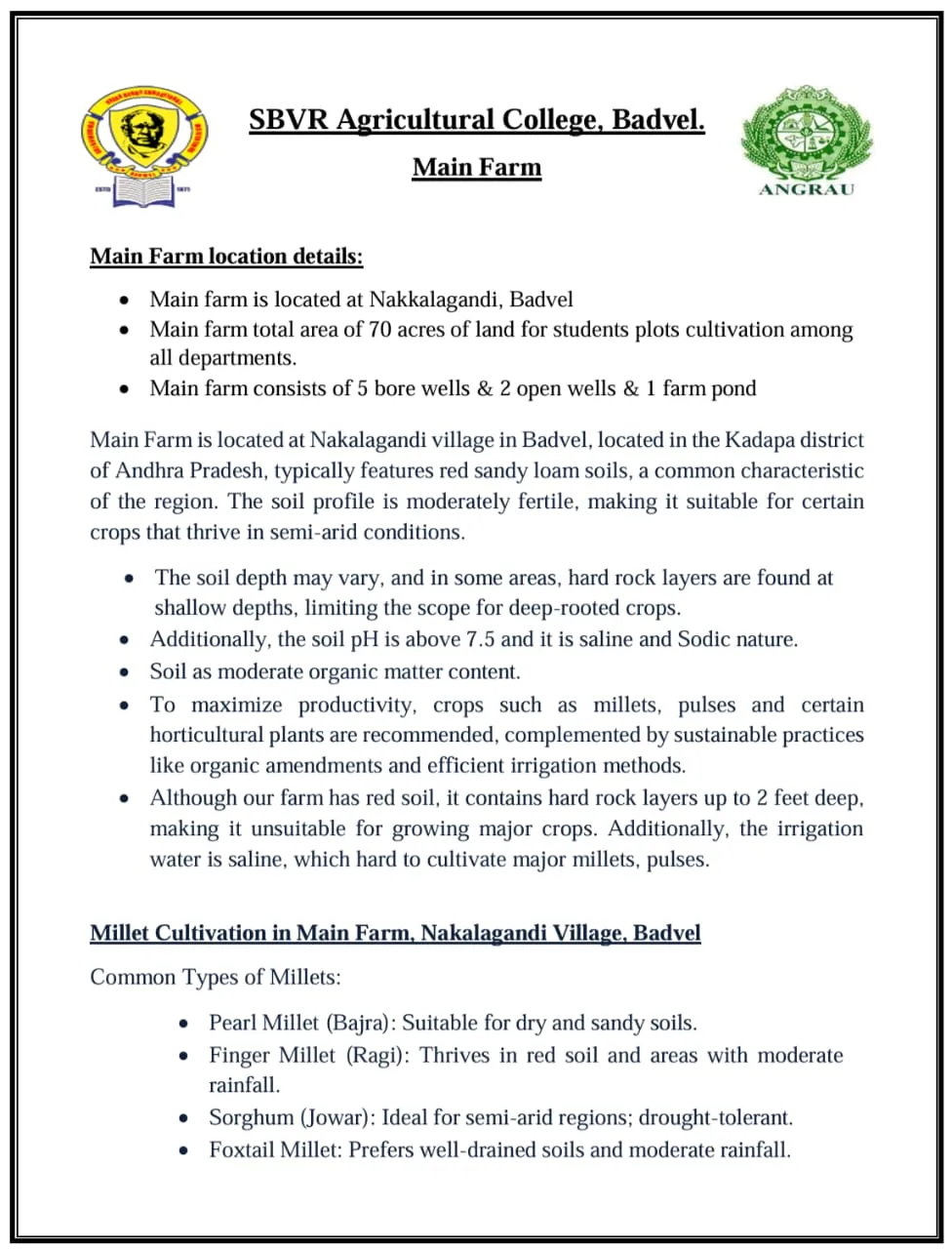
The college works 110 acres of farmland, including a five-acre mango garden, divided into departmental blocks — an agronomy wet block, a horticulture orchard block, and the student plots of the crop cafeteria. The farm’s location, soils and the crops each block suits are set out in the farm records below.
Field crops, horticultural crops and green manure crops are grown across the seasons: maize, sorghum, cotton and red gram in the field blocks; apple ber, water apple, guava, pomegranate and mango in the horticulture orchard block. Farm machinery includes a tractor with trolley and leveller, a ridge and furrow planter, a rotavator, a ferti-cum-seed drill, a cultivator and an MB plough.
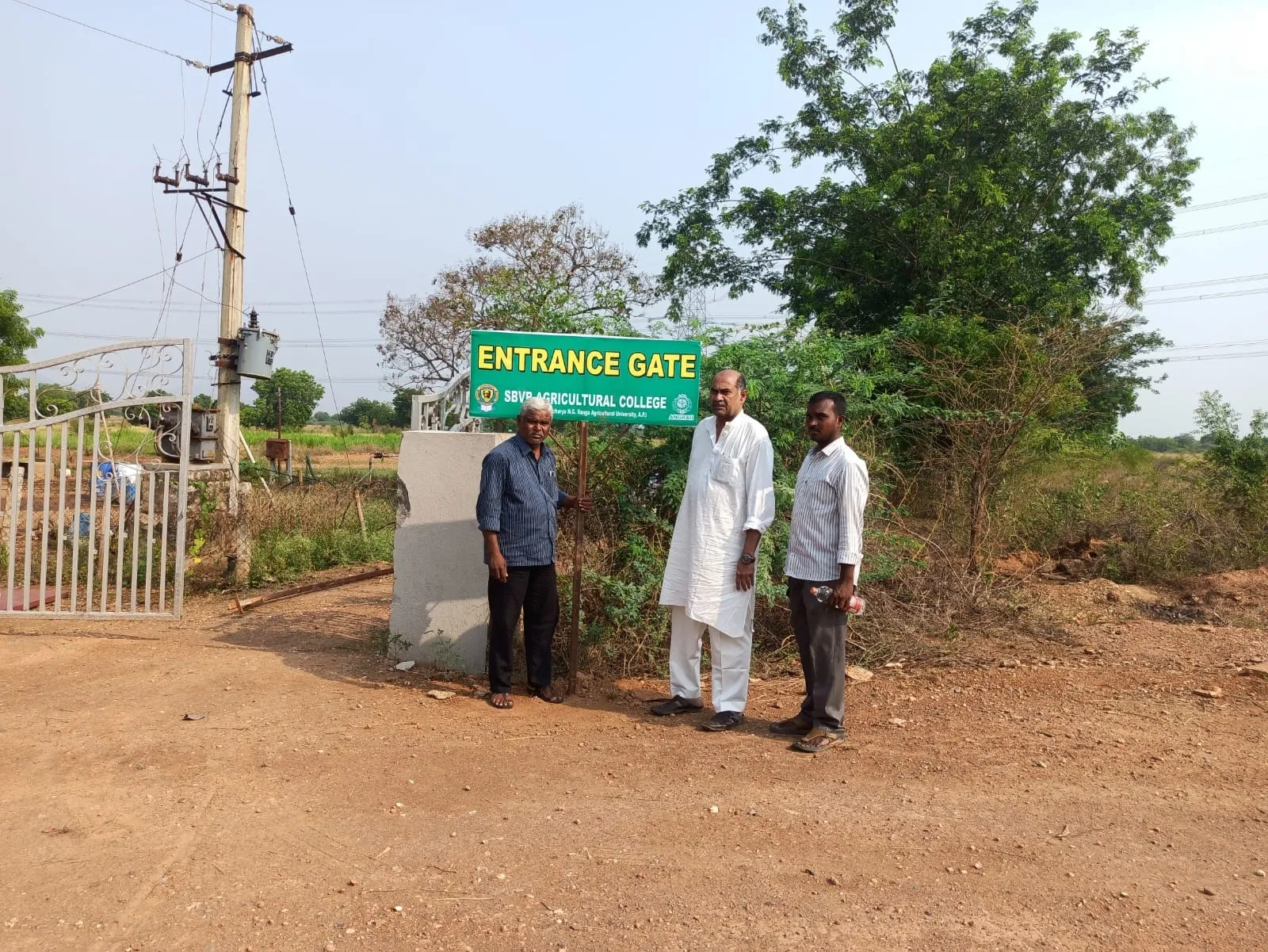
Entrance gate to the main farm
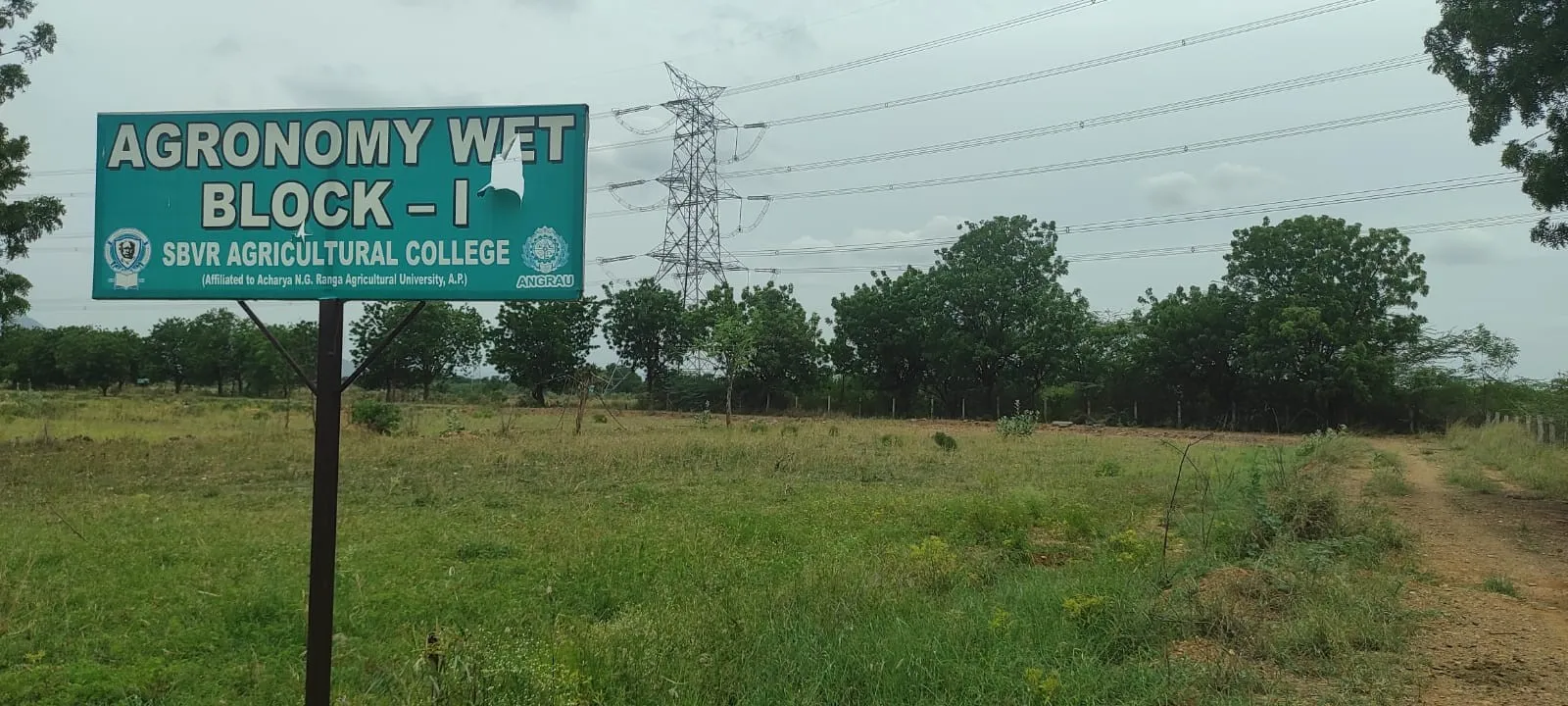
Agronomy wet block
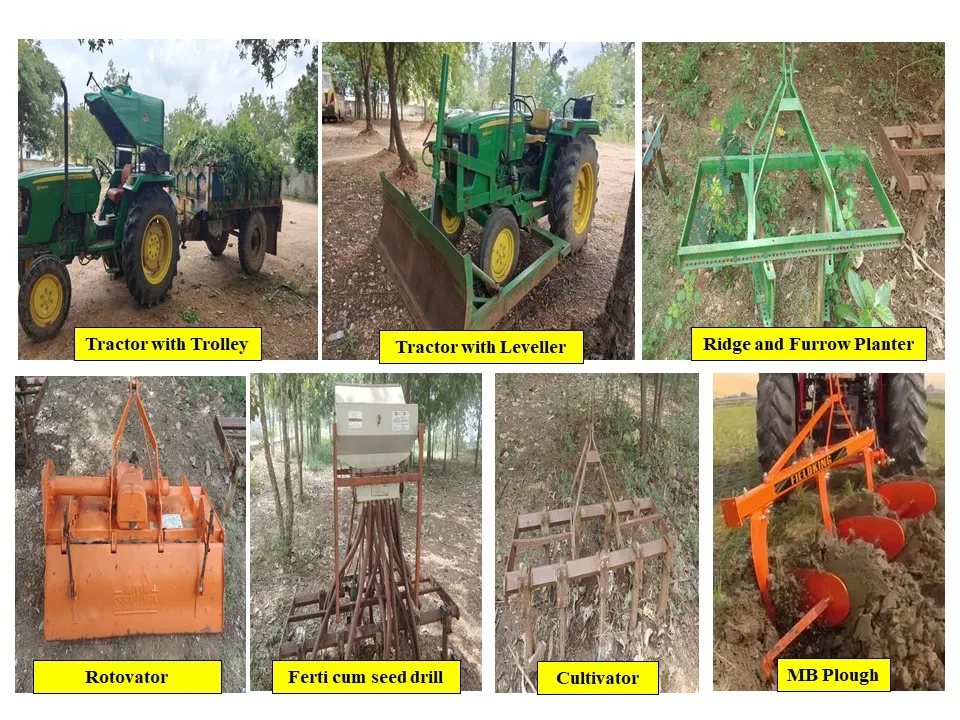
Farm machinery — tractor with trolley and leveller, ridge and furrow planter, rotavator, ferti-cum-seed drill, cultivator and MB plough
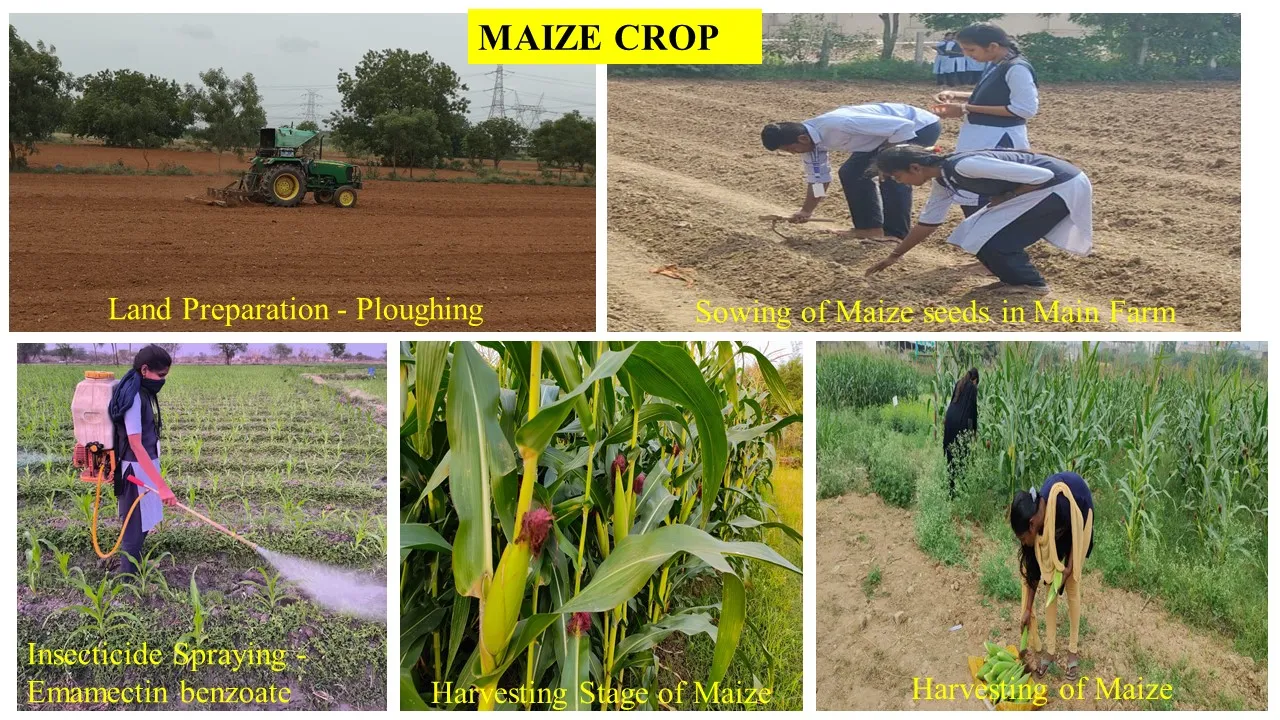
Maize — from land preparation to harvest
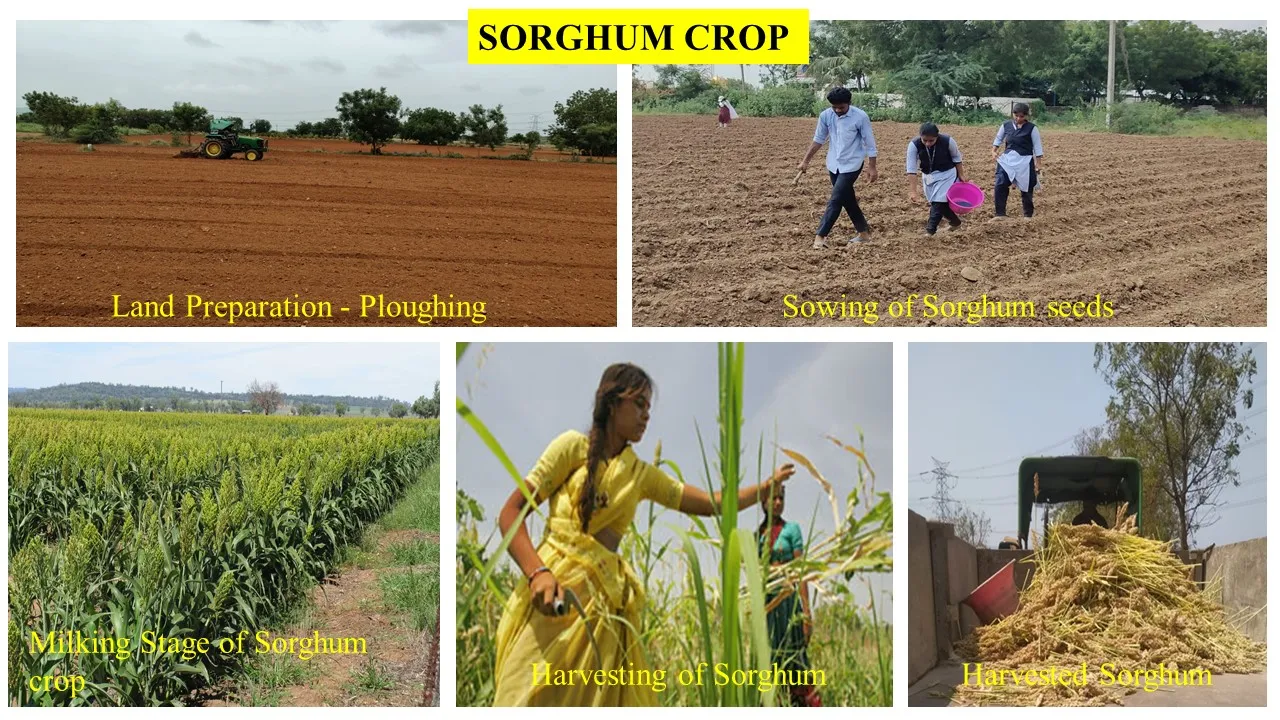
Sorghum — from land preparation to harvest
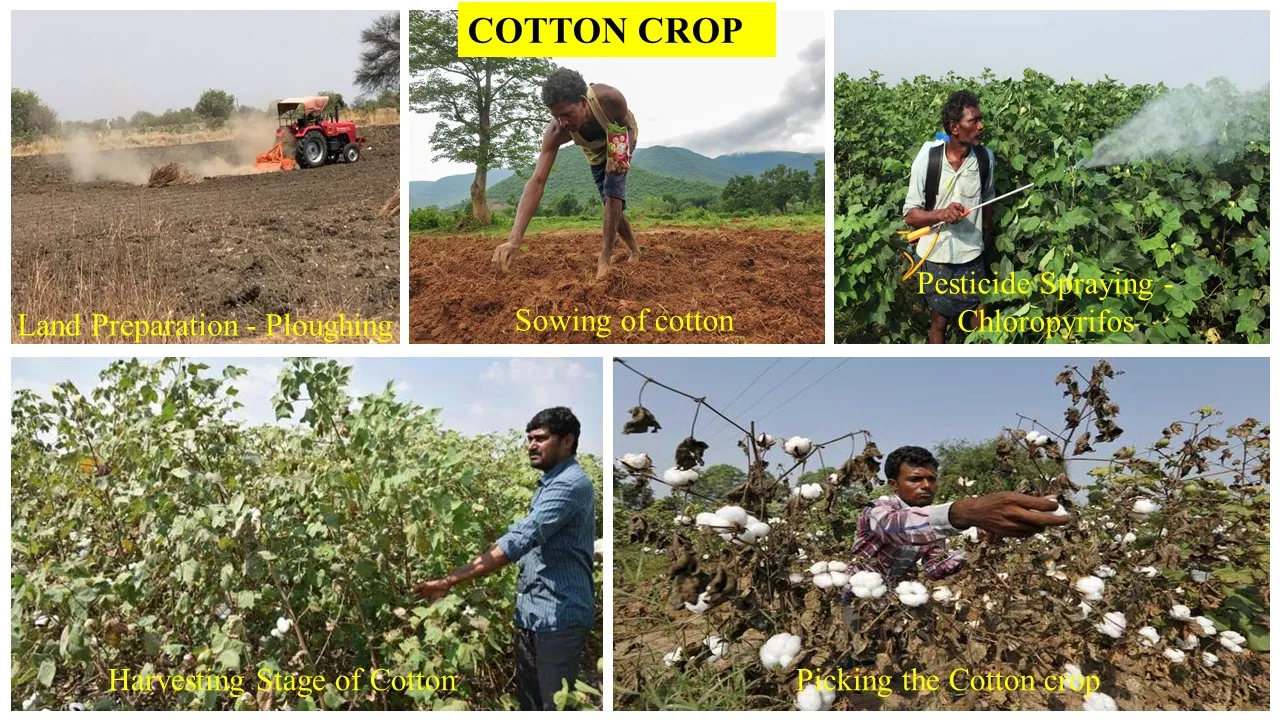
Cotton — from land preparation to harvest
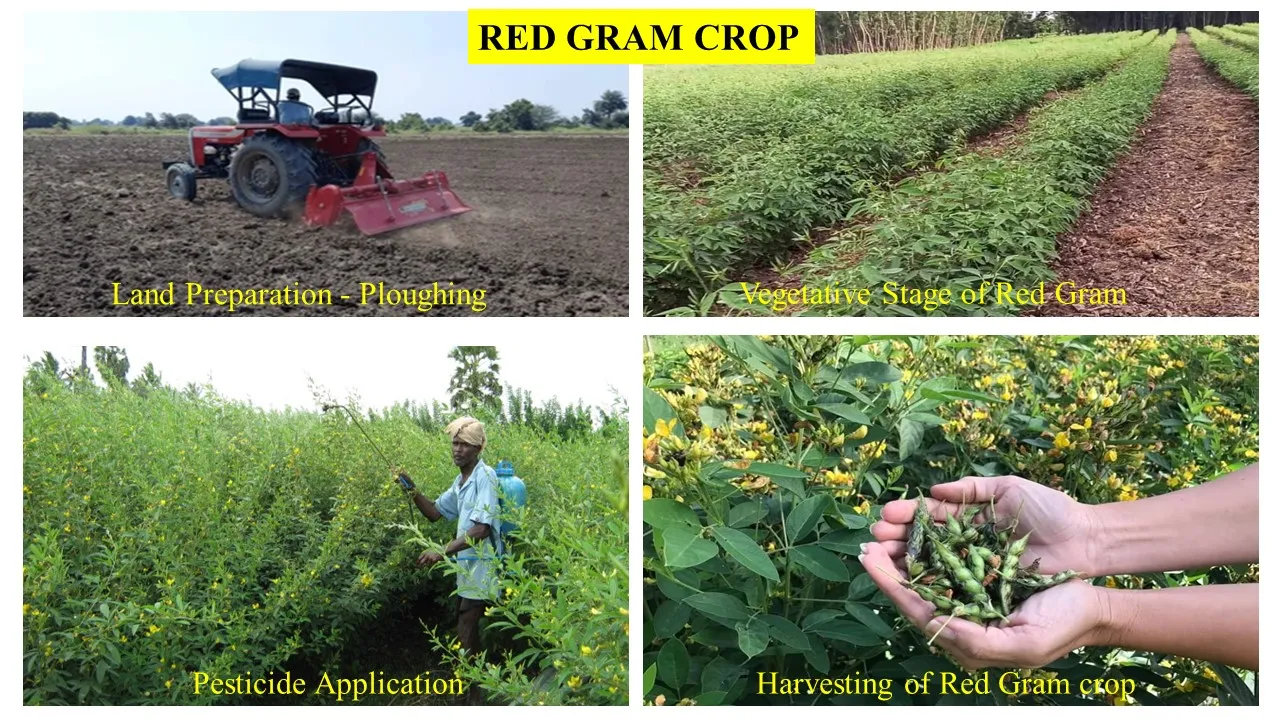
Red gram — from land preparation to harvest
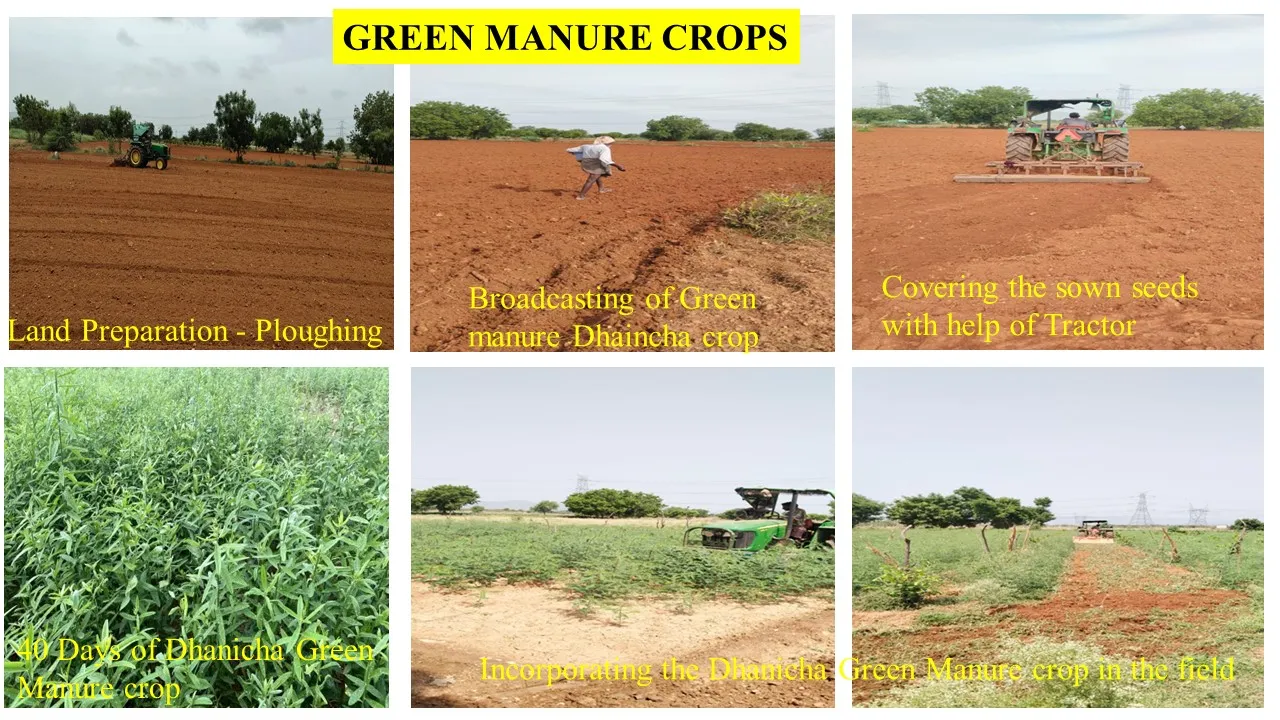
Green manure crops
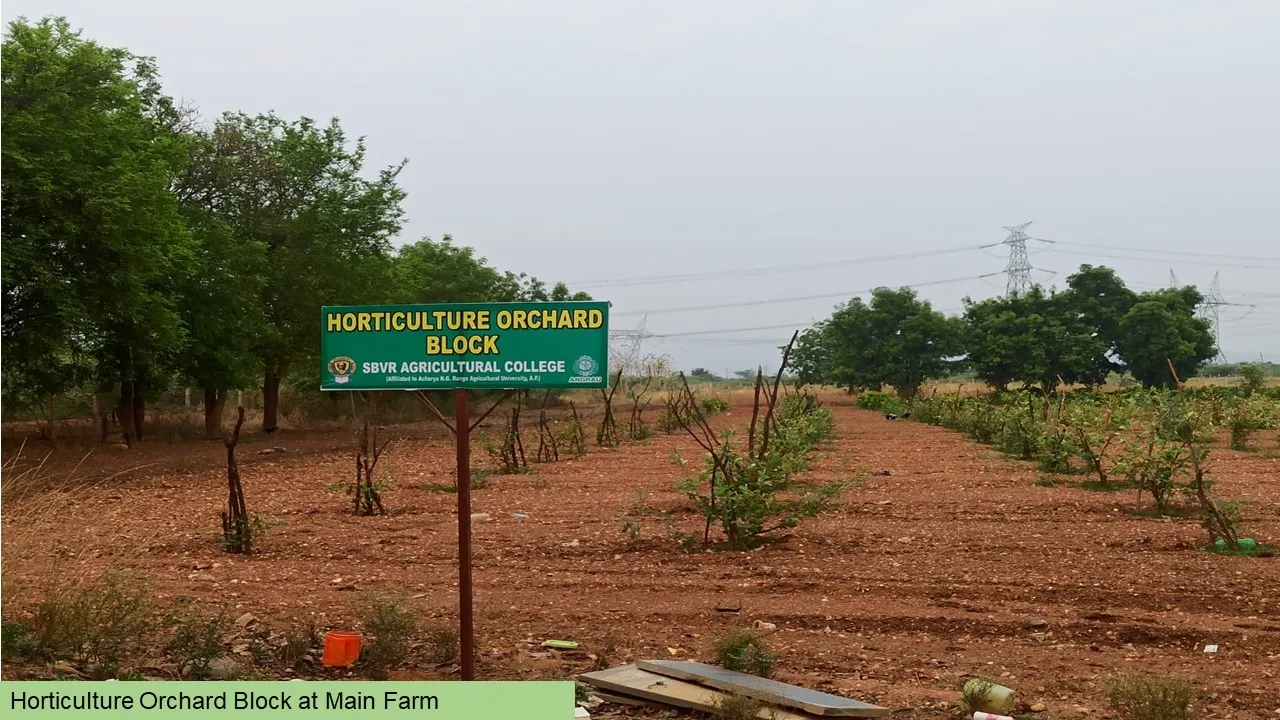
The horticulture orchard block at the main farm
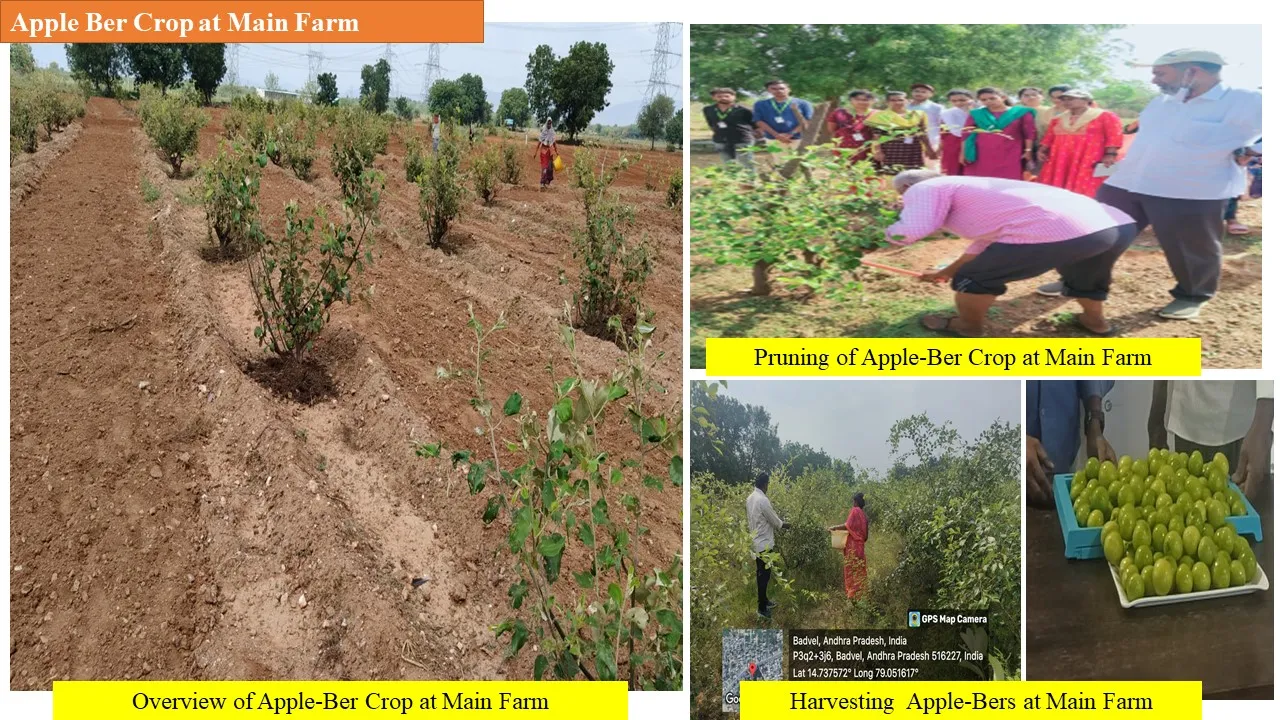
Apple ber crop at the main farm
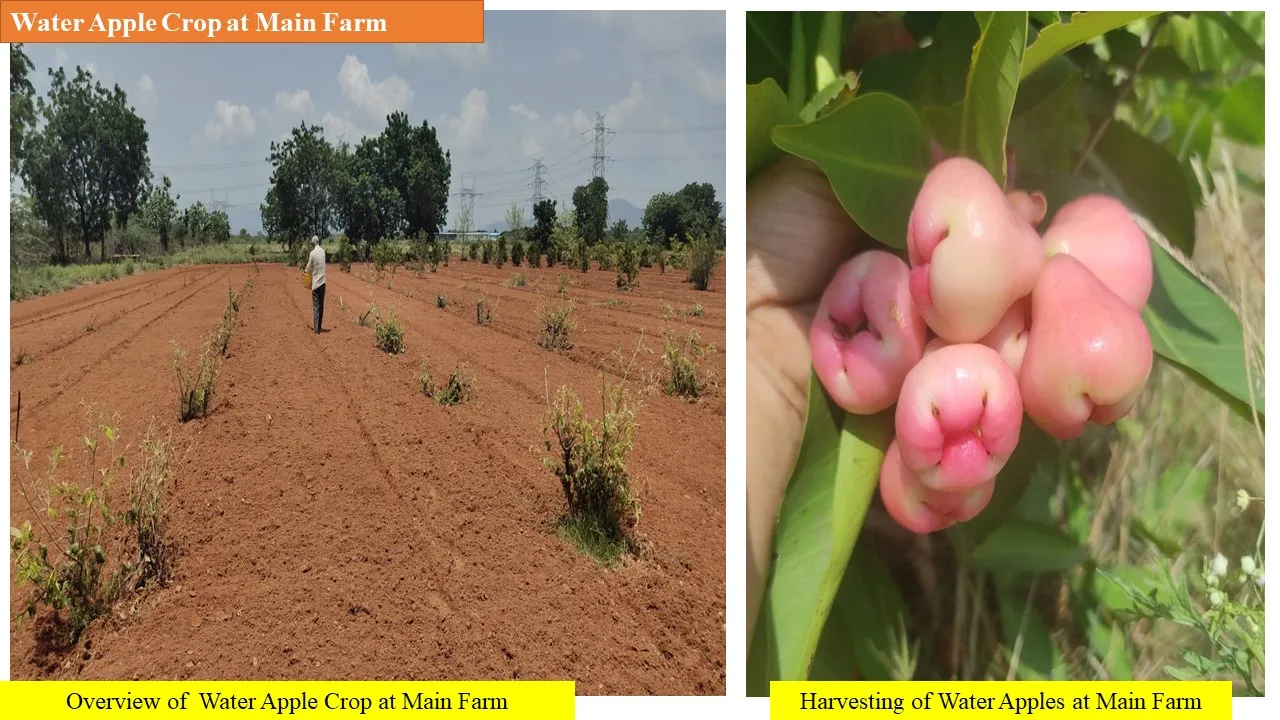
Water apple crop at the main farm
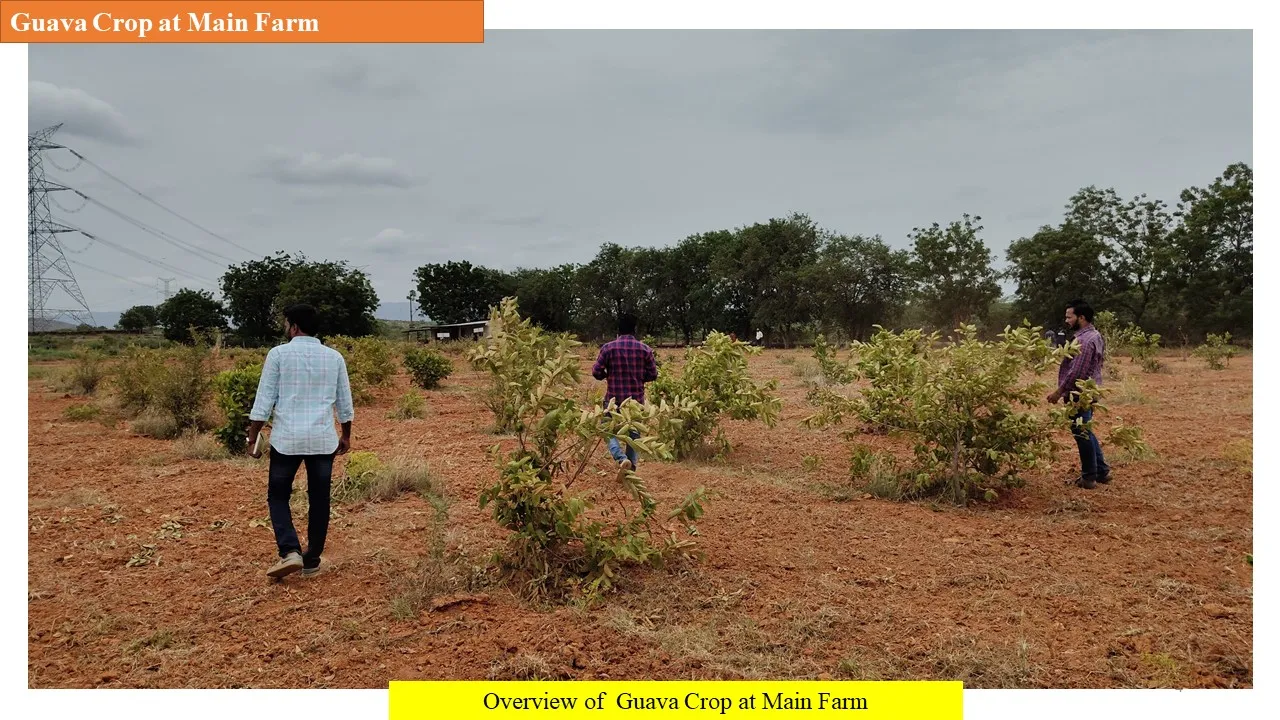
Guava crop at the main farm
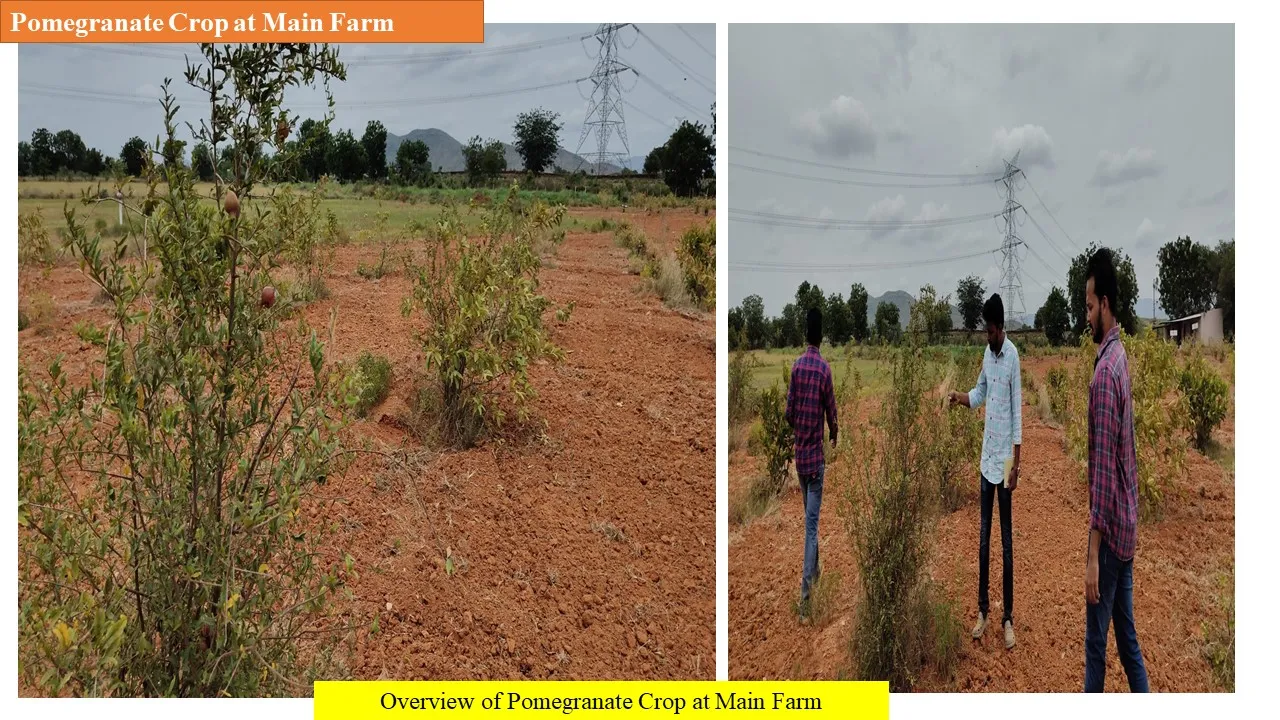
Pomegranate crop at the main farm
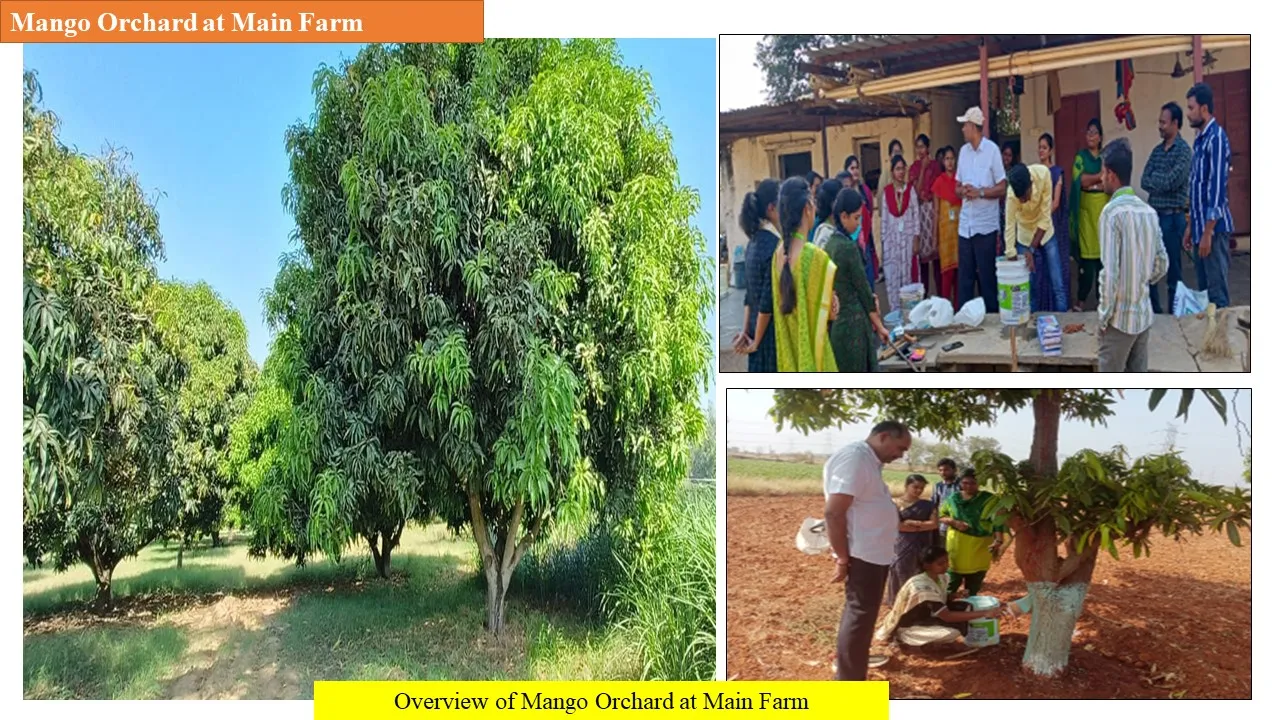
Mango orchard at the main farm
Reference
Farm layout and details
-
Layout plan of the main farm
-
Main farm details — location, soils and suitable crops
-
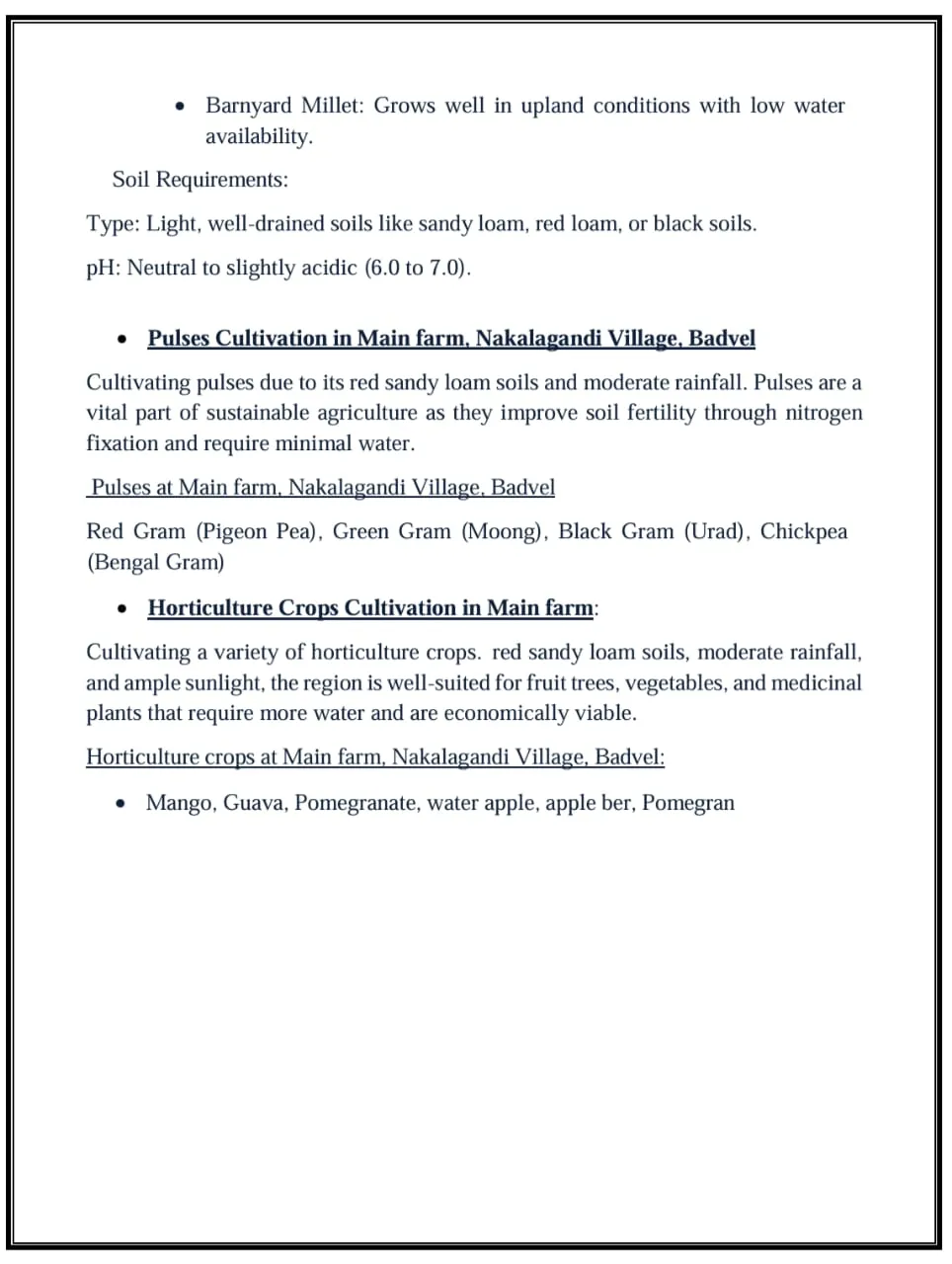
Millet, pulse and horticultural crop cultivation at the main farm
Student plots
The crop cafeteria
As part of farm operations, a crop cafeteria has been established for both Kharif and Rabi seasons. It serves as a live field laboratory, giving students real-time exposure to a range of crops through their complete growth stages — from germination to harvest.
The crop cafeteria is integrated into the curriculum under Crop Production I and Crop Production II, and is maintained semester-wise. It includes dedicated student plots where individual or group-based learning takes place, allowing students to plan, raise and manage crops on their own. By managing their own plots, students gain confidence, practical skills and decision-making ability that prepares them for farming, research and entrepreneurship.
What students learn on their plots
- Identification of different crops and understanding their characteristics and growth stages
- Planning of crop layout and selection based on season and cropping systems
- Execution of land preparation, seed treatment, nursery management and sowing
- Management of nutrient supply, irrigation schedules and weed control
- Monitoring and control of insect pests and diseases using suitable methods
- Harvesting, threshing and yield estimation
- Familiarisation with post-harvest handling, storage and marketing
- Exposure to mono-cropping, intercropping and mixed cropping systems
Crops grown, semester-wise
| Group | Crops |
|---|---|
| Cereals | Rice, wheat, barley, maize, sorghum, pearl millet, finger millet, proso millet, little millet, kodo millet, foxtail millet, barnyard millet |
| Pulses | Pigeon pea, green gram, black gram, Bengal gram, lentil, peas, horse gram, cowpea |
| Oilseeds | Groundnut, sesame, soybean, rapeseed, mustard, sunflower, castor, linseed, niger |
| Fibre crops | Cotton, mesta |
| Sugar crops | Sugarcane |
| Forage crops | Sorghum, lucerne, napier grass |
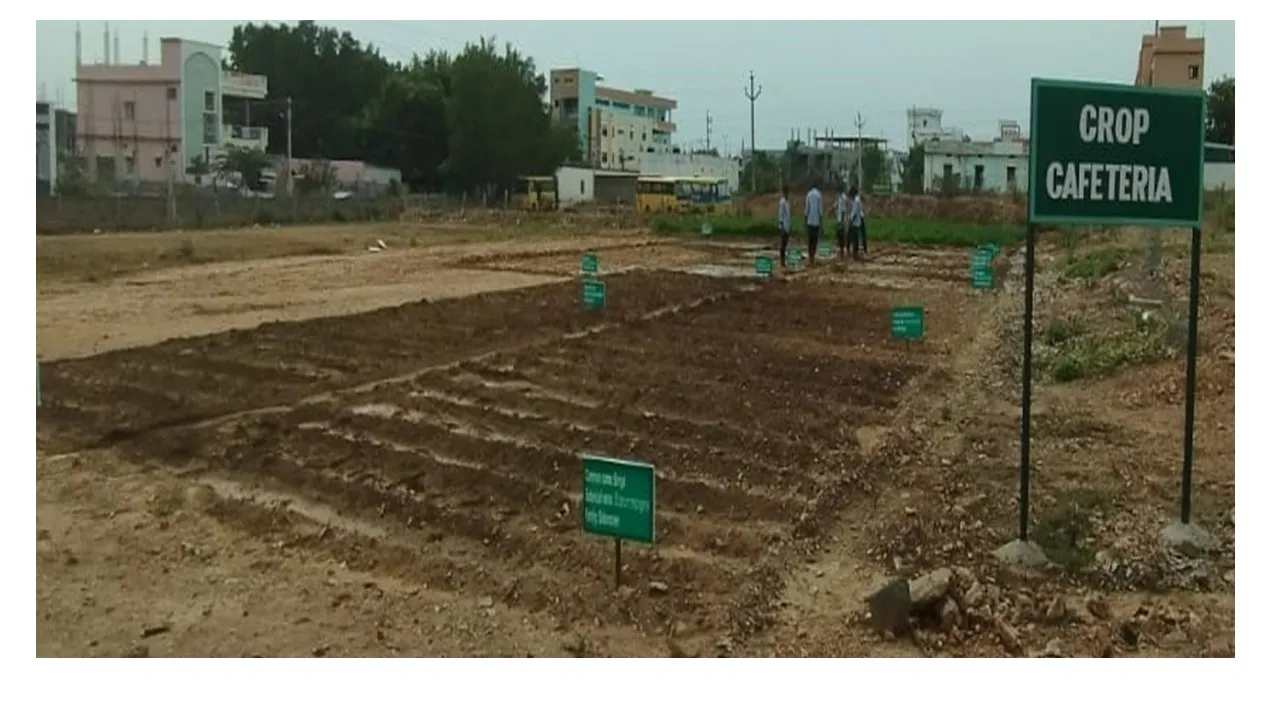
The crop cafeteria
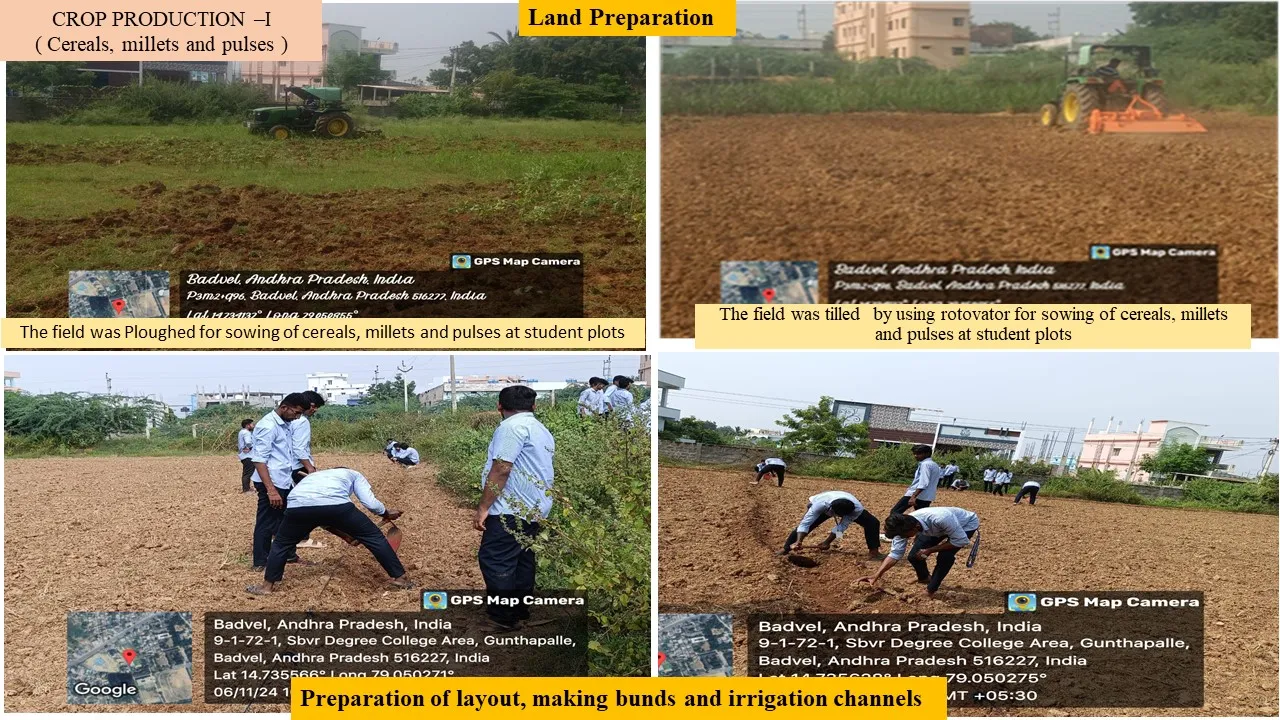
Land preparation at the student plots
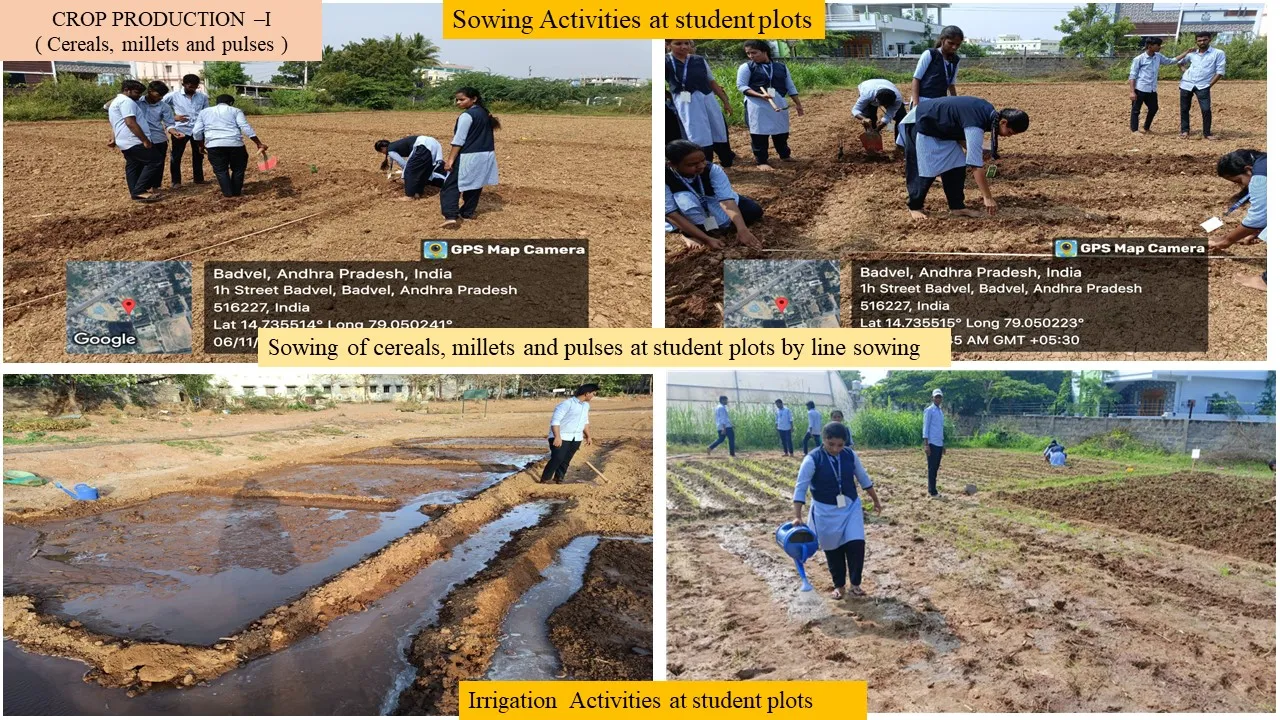
Sowing activities at the student plots
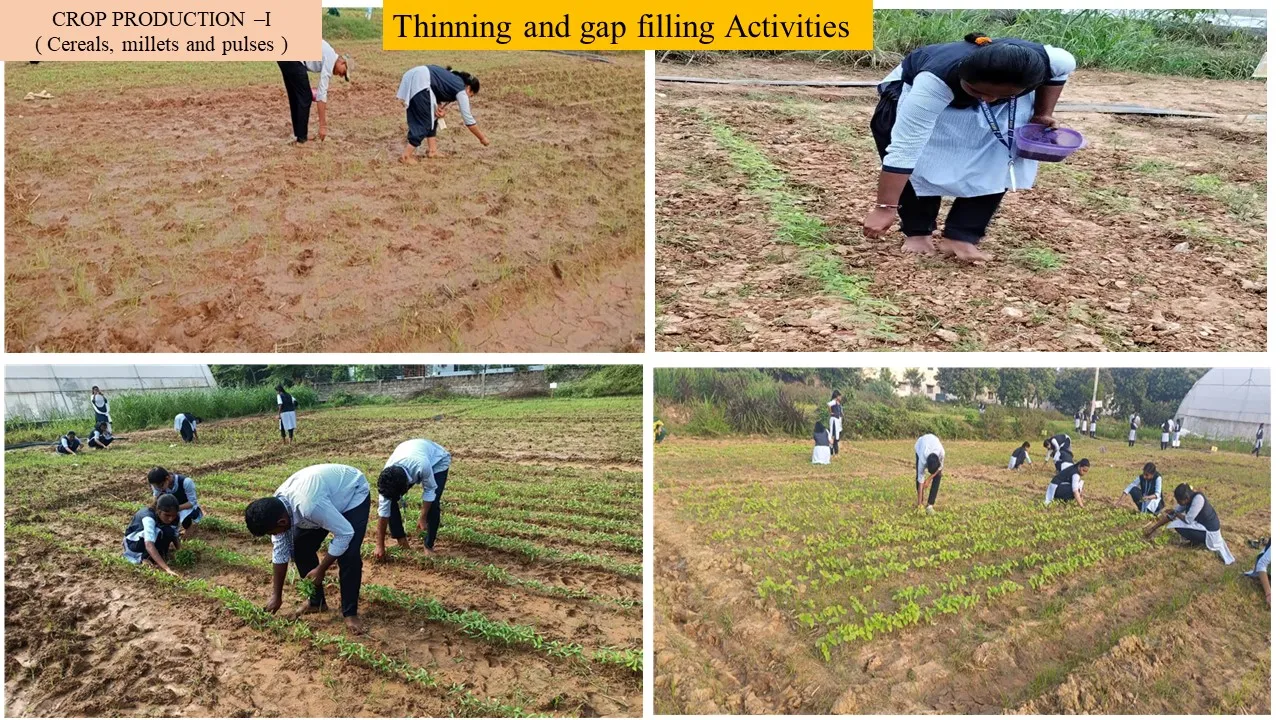
Thinning and gap filling
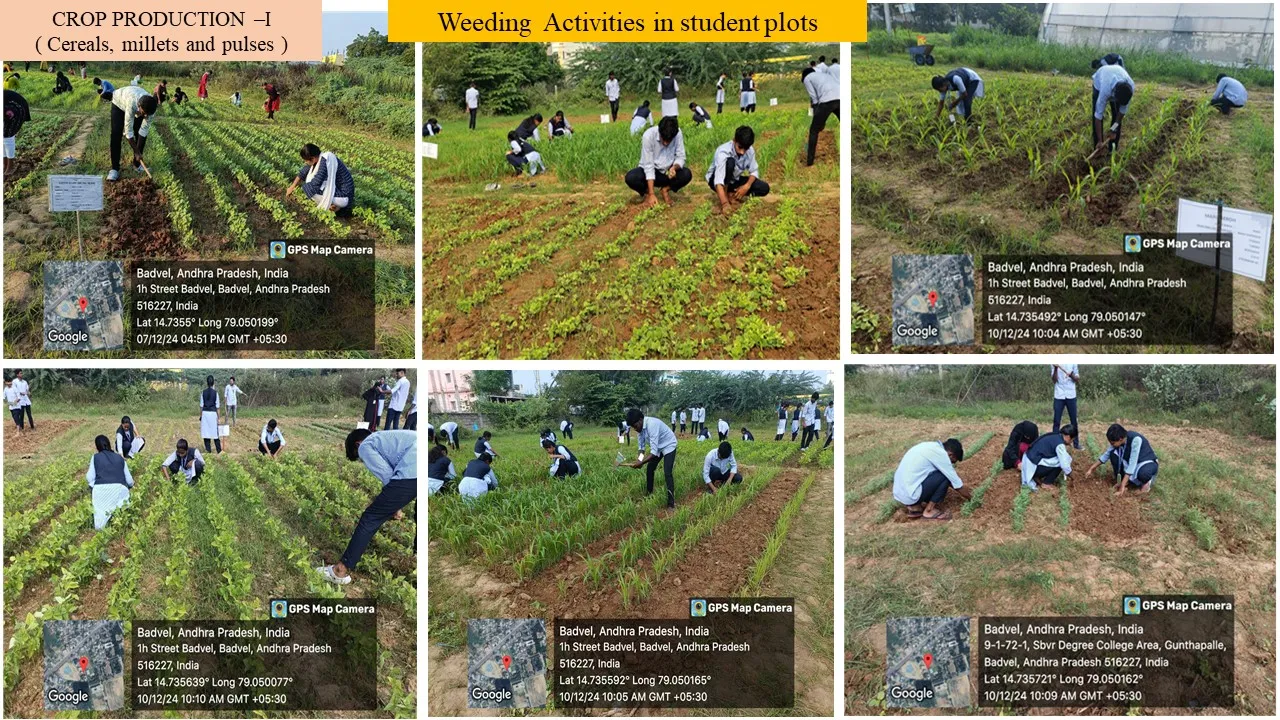
Weeding at the student plots
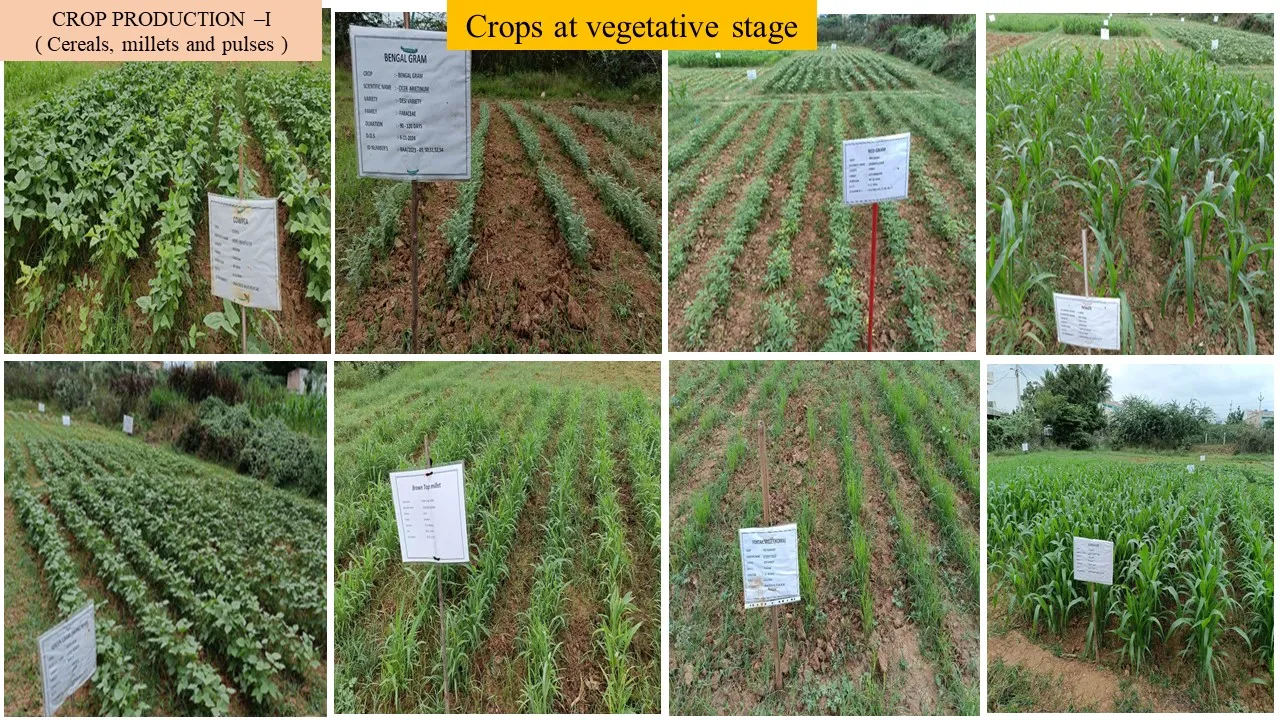
Crops at the vegetative stage
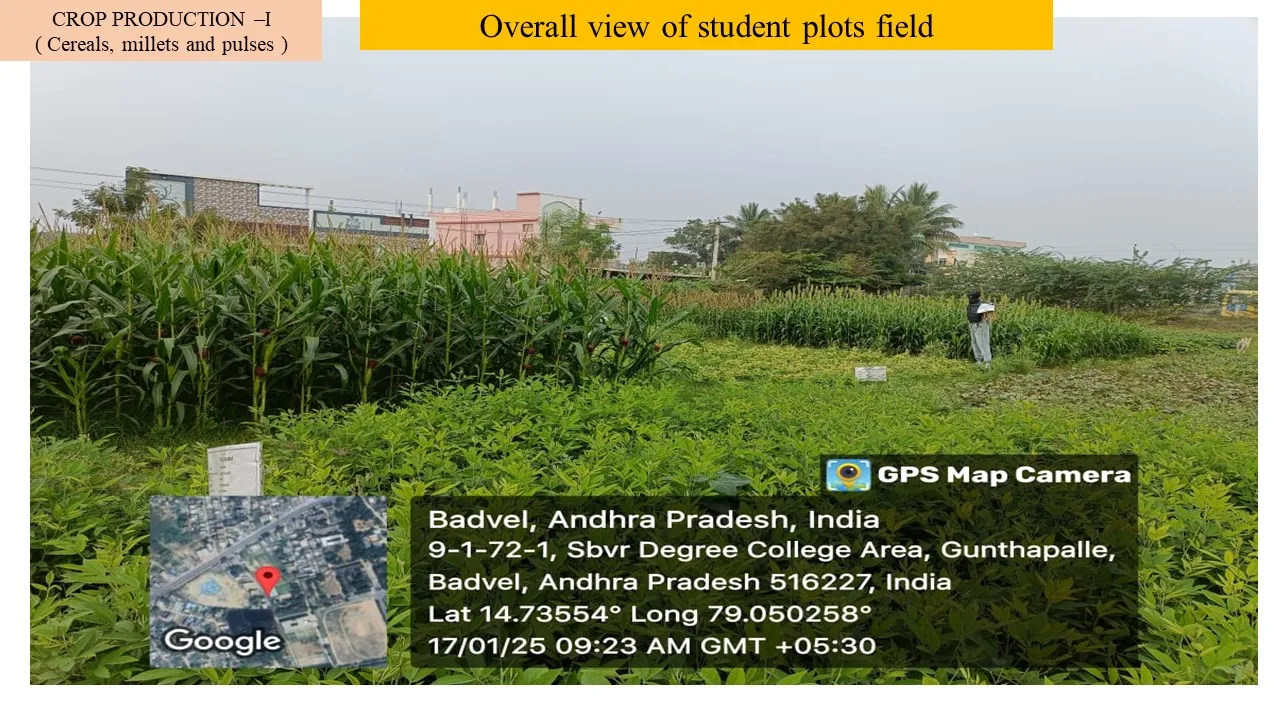
Overall view of the student plots field
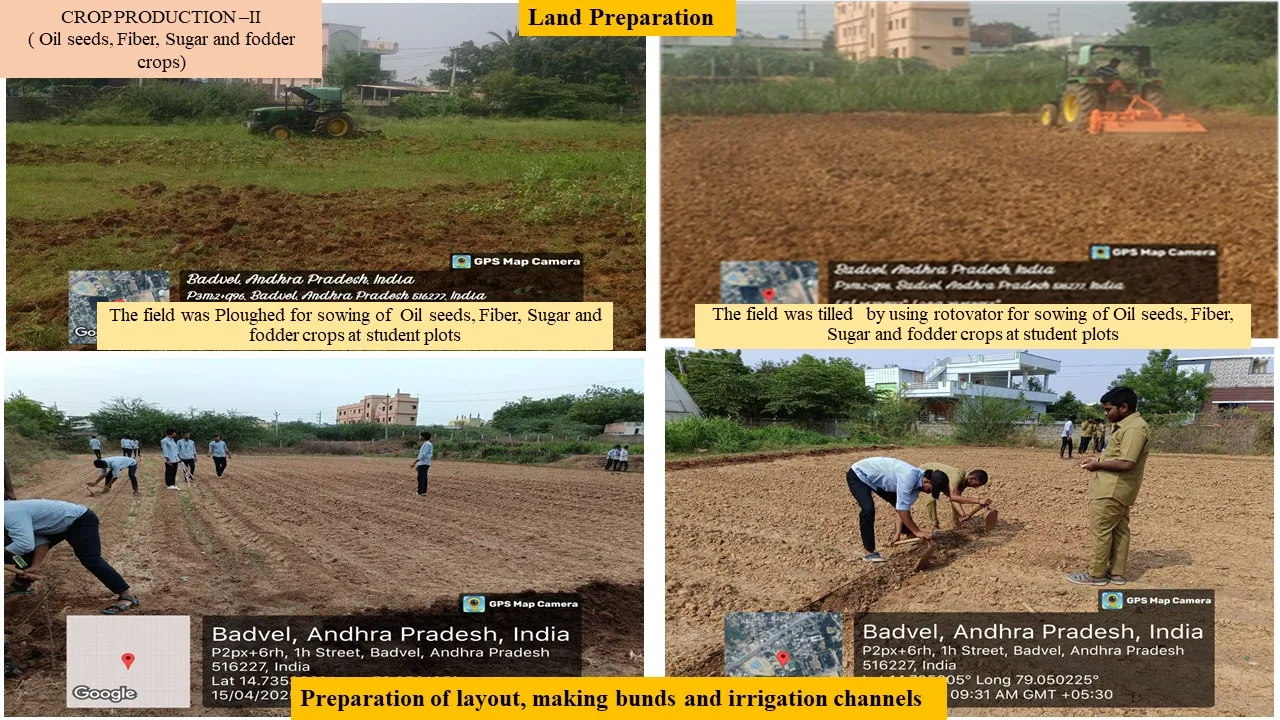
Land preparation for oil, fibre, sugar and fodder crops
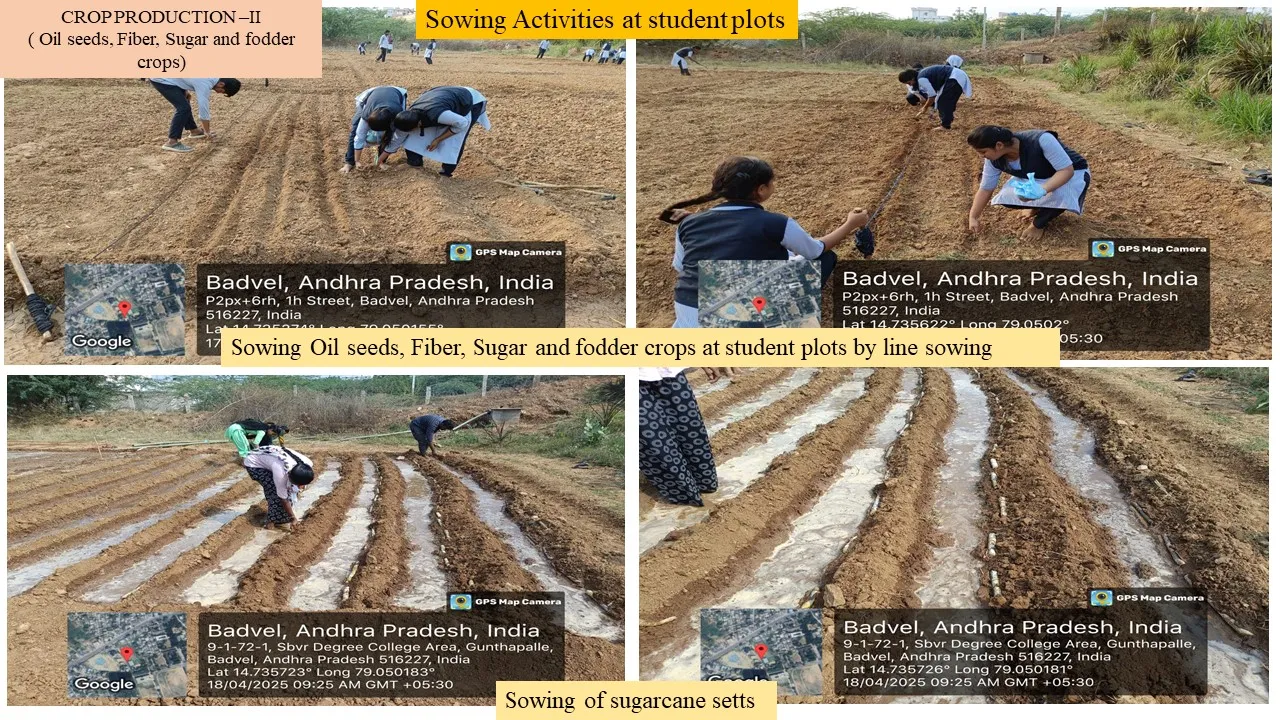
Sowing of oil, fibre, sugar and fodder crops by line sowing
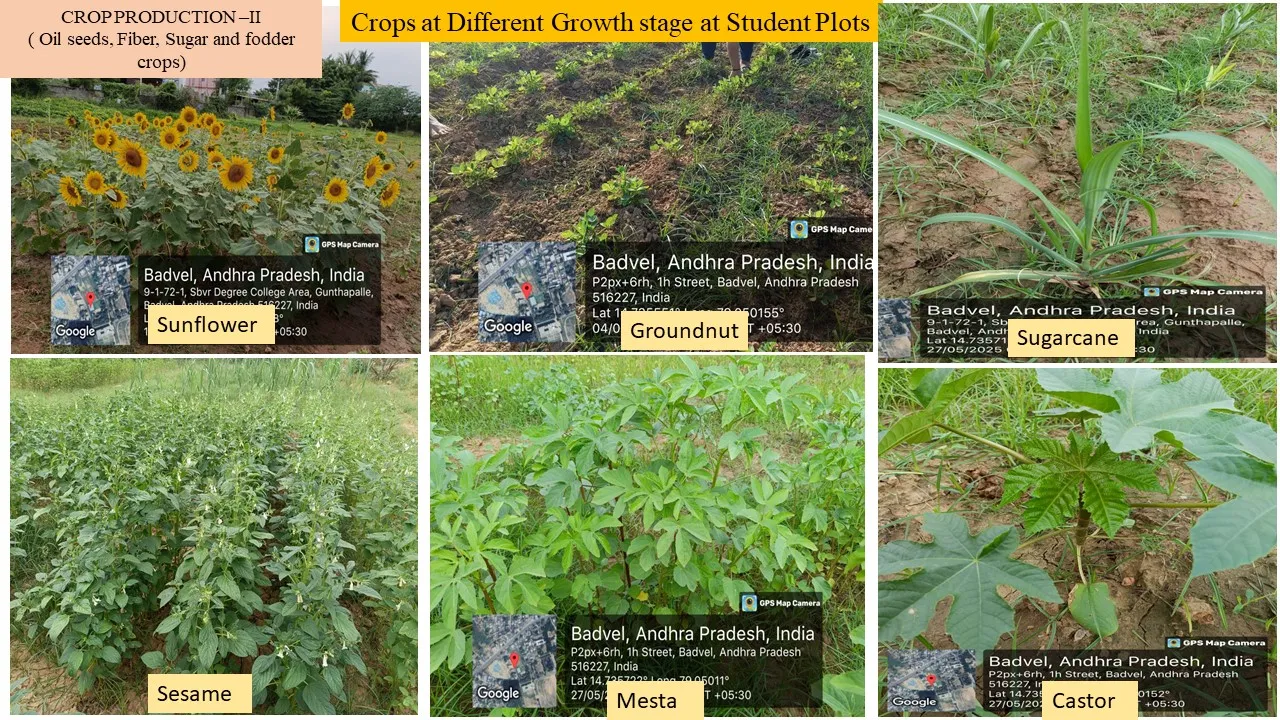
Crops at different growth stages at the student plots
Horticulture
Fruit orchard
The Department of Horticulture established the fruit orchard in 2023 across two acres, with a proper layout, alongside the five-acre mango orchard at the main farm. The orchard includes mango, banana, jamun, guava, jackfruit, lemon, sweet lime, aonla and pomegranate. Anjeer and blueberry are grown as exotic fruit crops under Badvel conditions.
Mango trees are planted at 10 × 10 metre spacing, allowing room for canopy development and easy management, with a drip irrigation system for efficient water use. Bordeaux paste is applied to the trunks after pruning or mechanical injury, to prevent gummosis, canker and bark splitting.
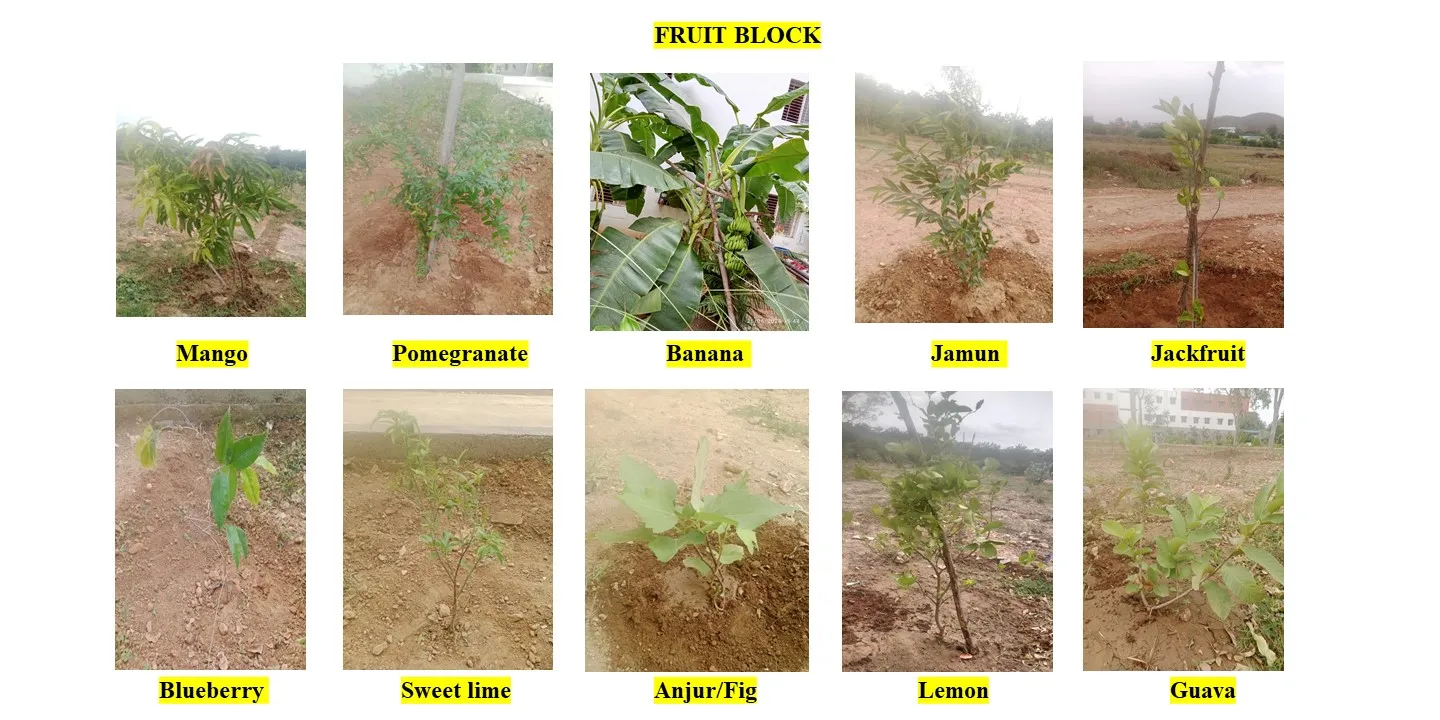
The fruit block — mango, pomegranate, banana, jamun, jackfruit, mulberry, sweet lime, anjeer, lemon and guava
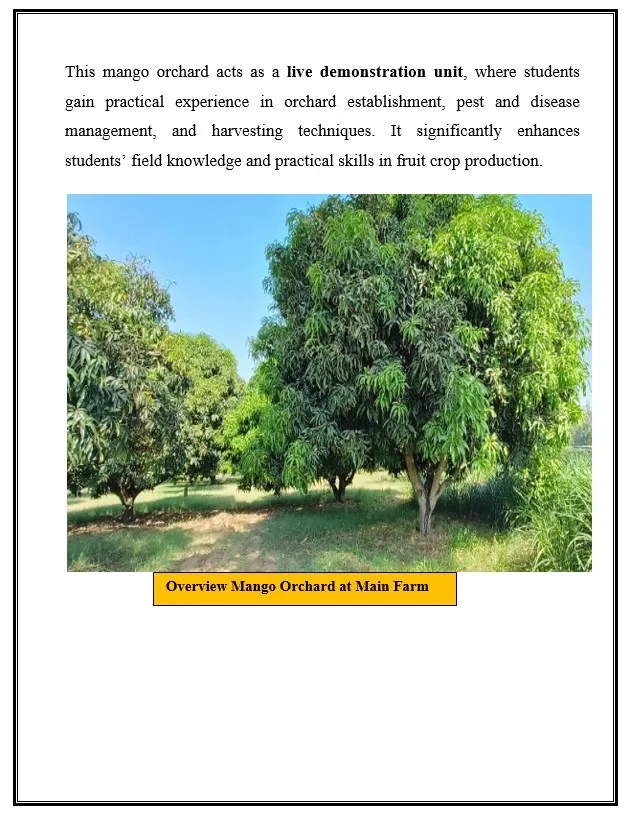
Overview of the mango orchard, a live demonstration unit
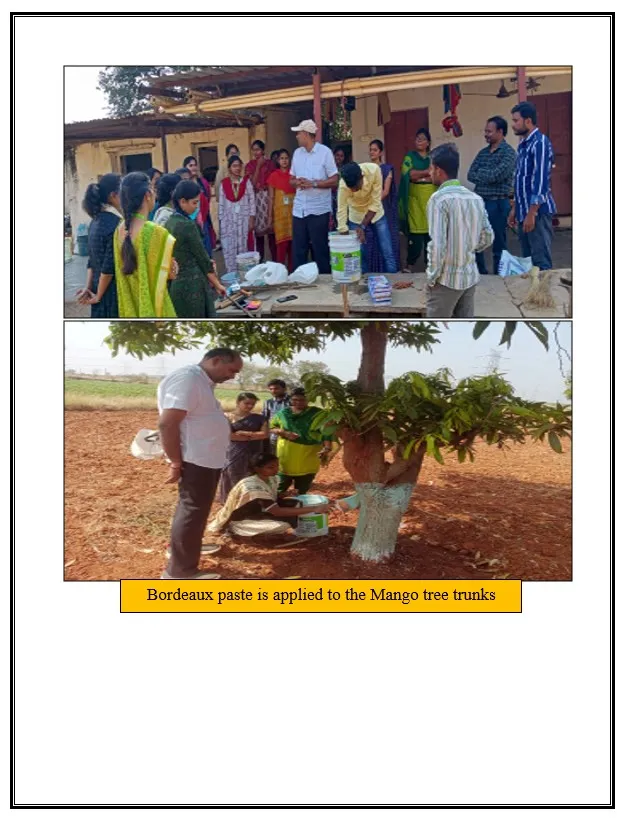
Bordeaux paste applied to the mango tree trunks
Aromatics
Medicinal and aromatic farming
Medicinal plants are highly beneficial to the human body and treat several diseases and bacterial infections due to high concentrations of antioxidants. A large number of medicinal and aromatic plants have been established in the medicinal block: shatavari, Sabah snake grass, insulin plant, ranapala, samudrapala, Krishna tulasi, ram tulasi, lavang tulasi, nalleru aada, lemon grass, aloe vera, gucchapatra, ajwain plant, bryophyllum and betel vine.
Students are educated practically about the benefits of medicinal plants. Training programmes are conducted on production technology and growing conditions that retain higher oil concentrations and volatile compounds. Different medicinal plants are propagated through cuttings and divisions.
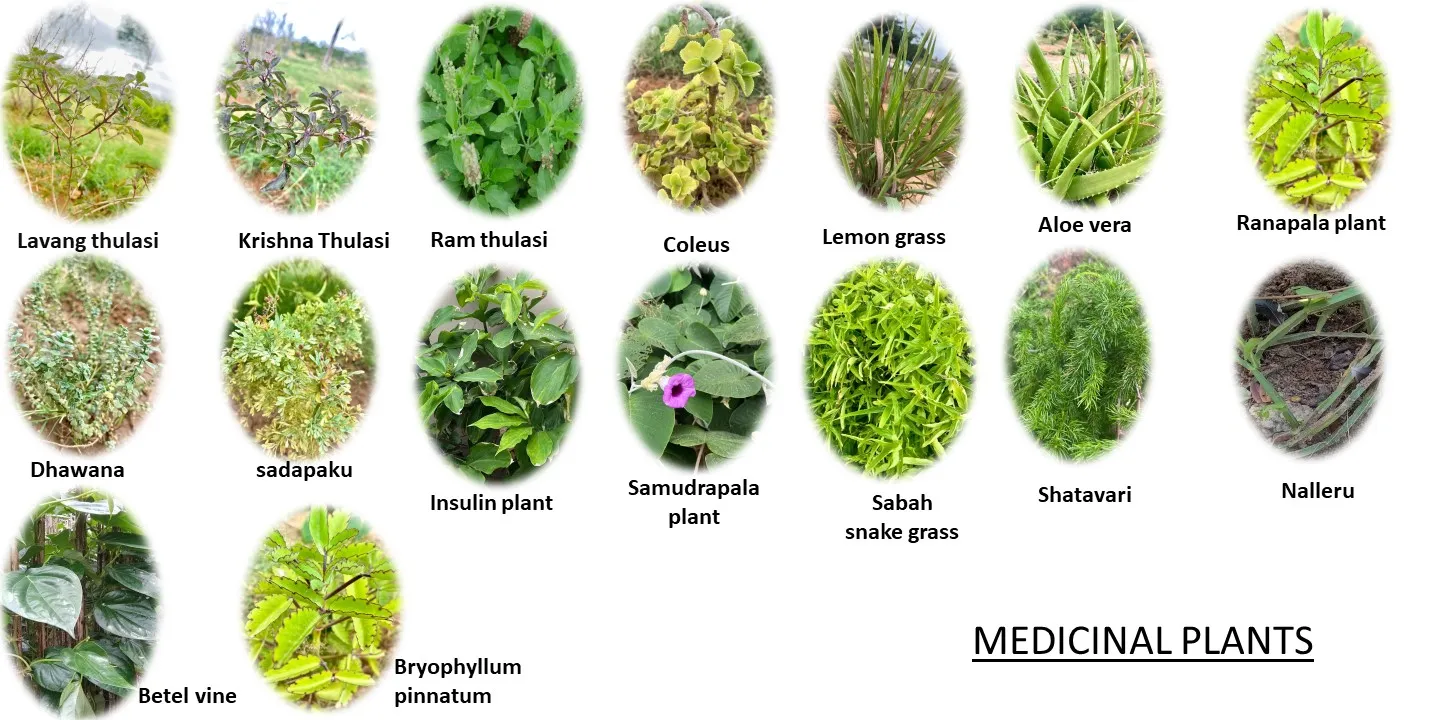
Medicinal plants — lavang tulasi, Krishna tulasi, ram tulasi, coleus, lemon grass, aloe vera, ranapala, dhawana, sadapaku, insulin plant, samudrapala, shatavari, Sabah snake grass, nalleru and betel vine
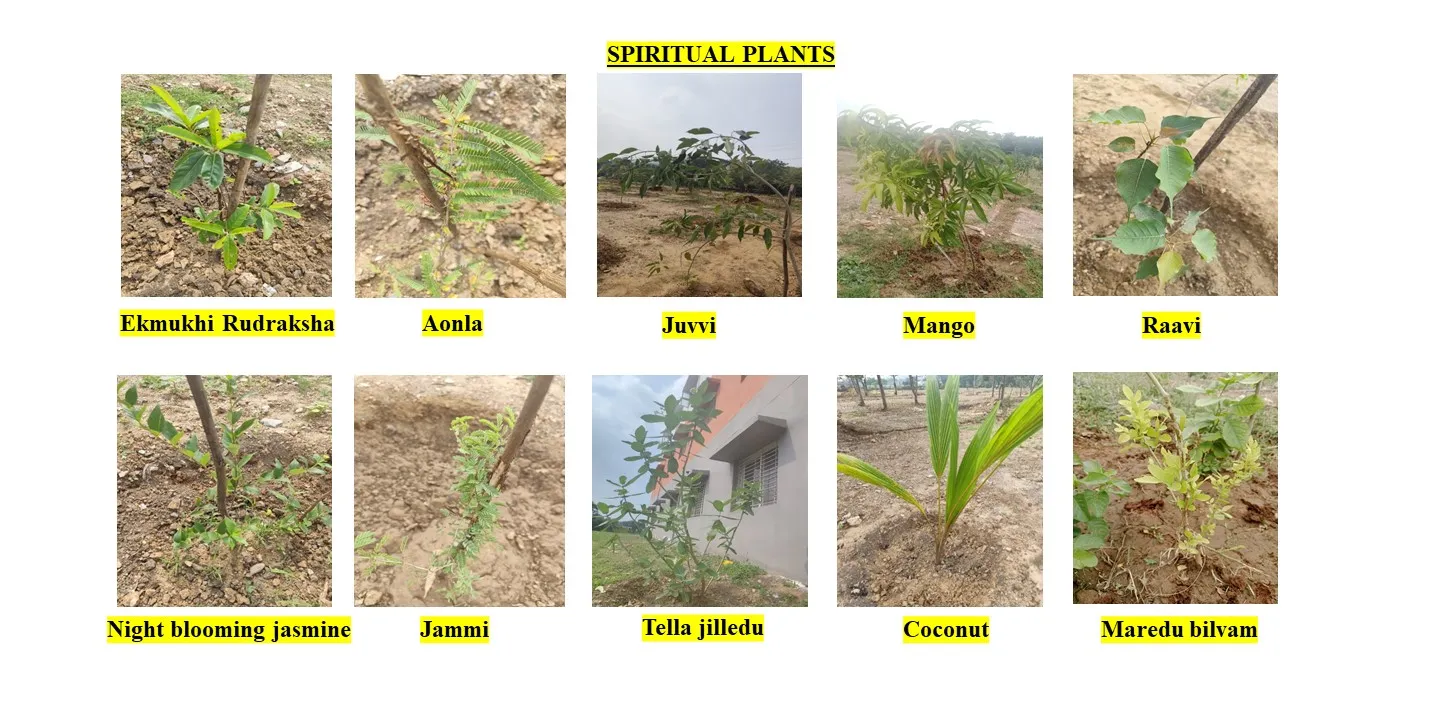
The spiritual and medicinal plant block
Natural farming
Organic and natural farming block
The organic and natural farming block is where students prepare and apply the inputs themselves. Twelve preparations are made and documented through the season:
- Enriched VAM
- Egg amino acid
- Vermiwash
- Amruthjel
- Enriched FYM
- Panchagavya
- Enriched panchagavya
- Organic viral solution
- Sub-soil solution
- Waste decomposer solution
- Vermicompost
- EPB and EPF nano culture
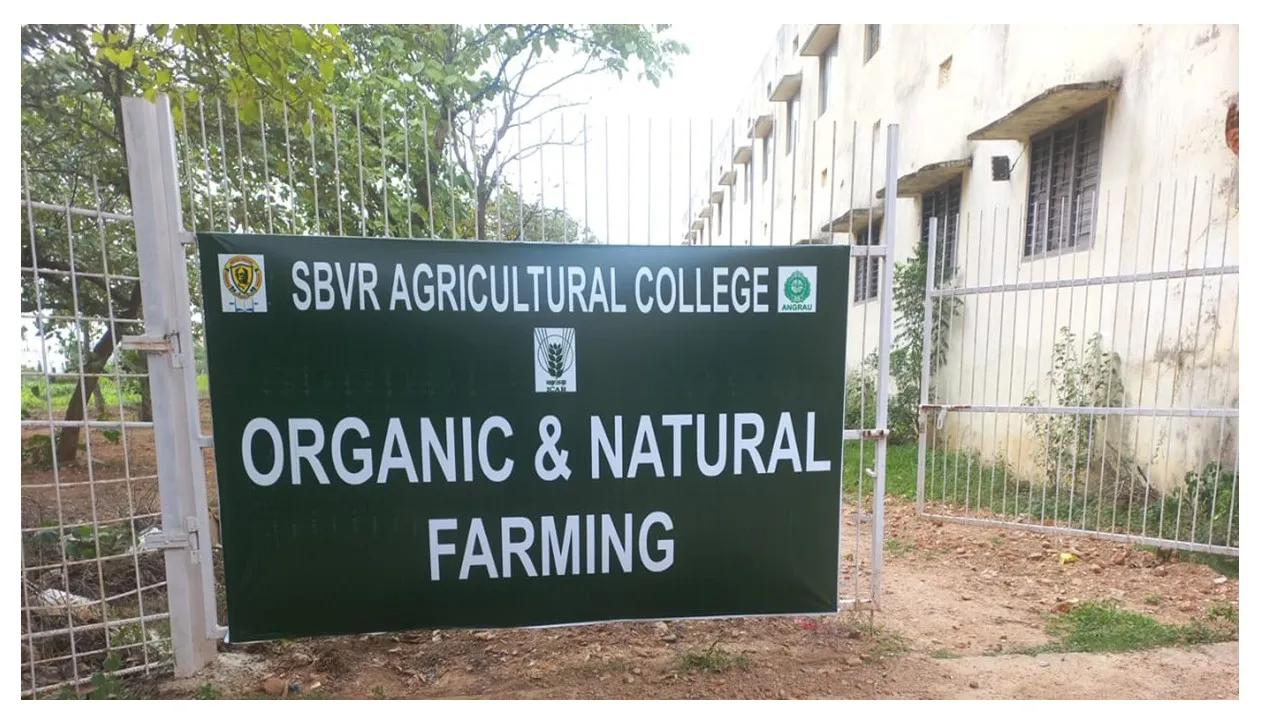
The Organic & Natural Farming block
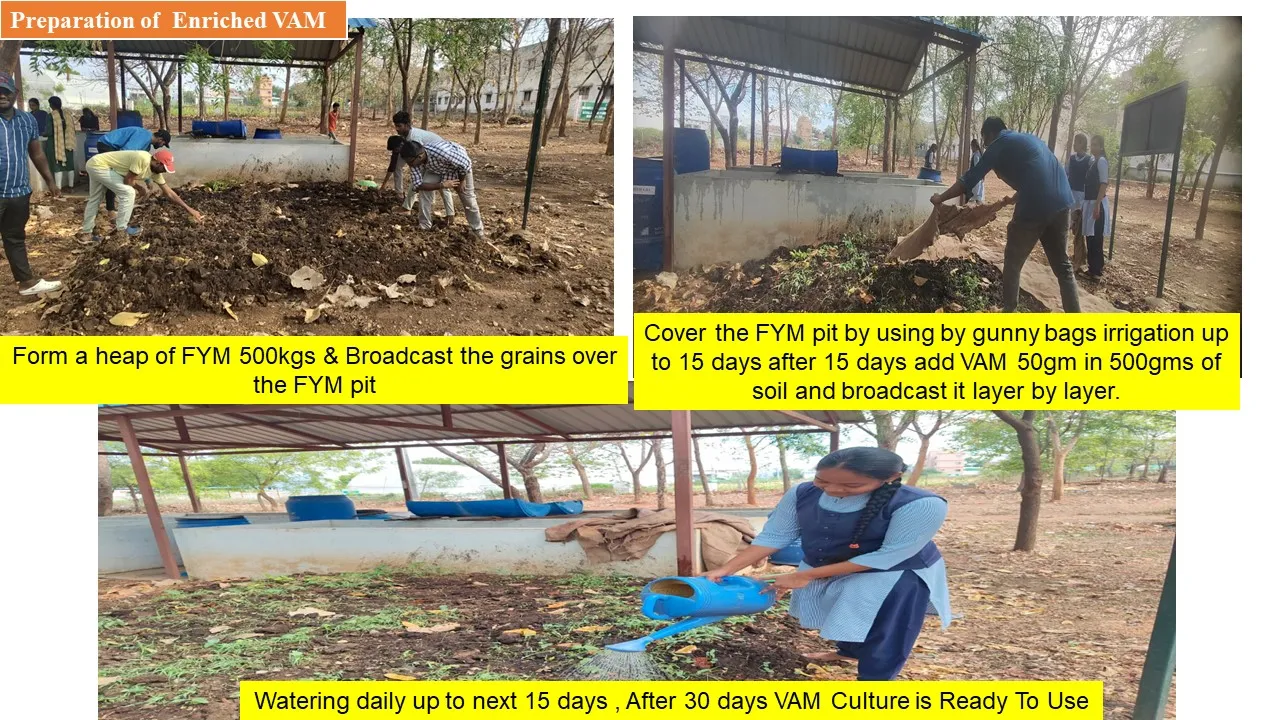
Enriched FYM preparation
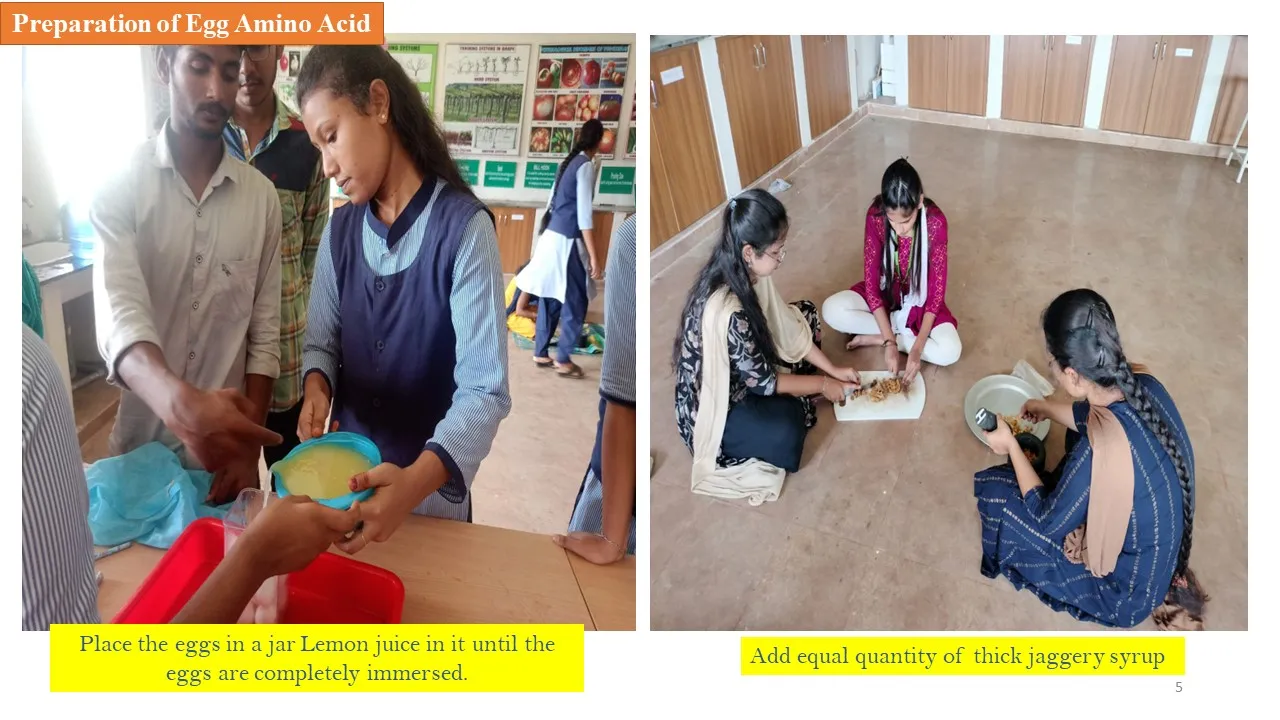
Egg amino acid preparation
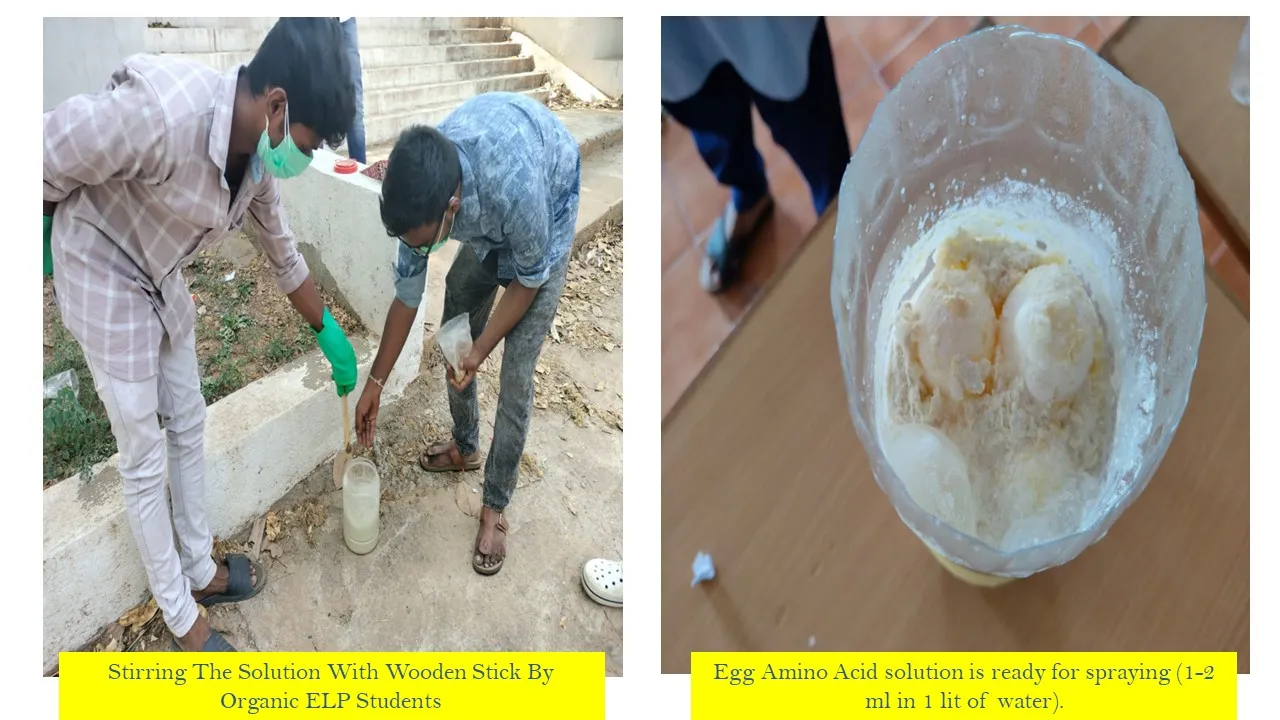
Egg amino acid solution, ready for spraying
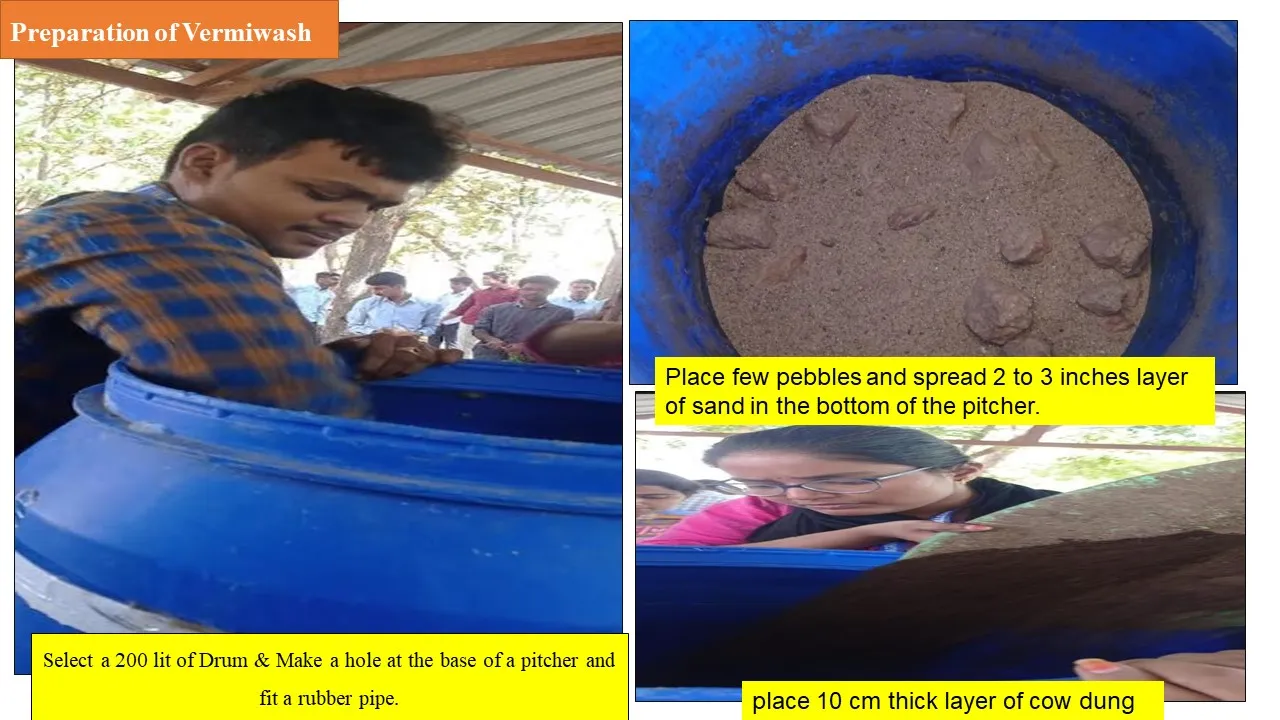
Vermiwash preparation
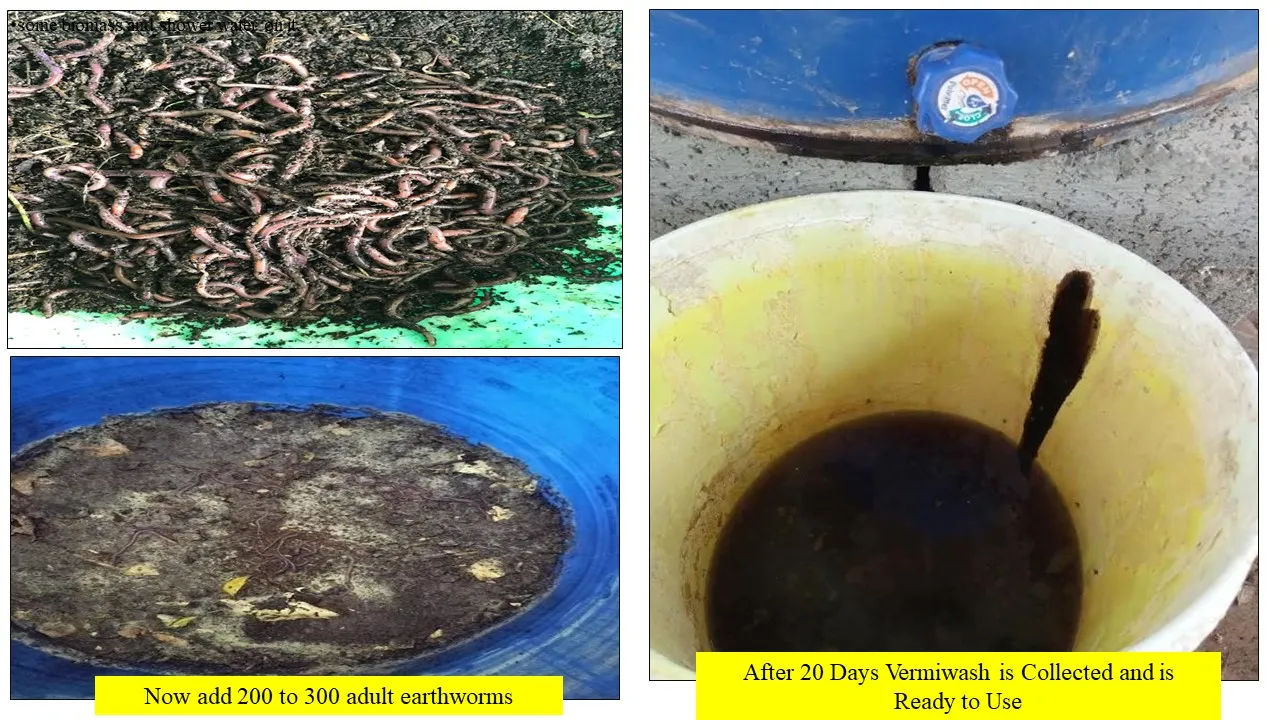
Vermiwash collected after twenty days
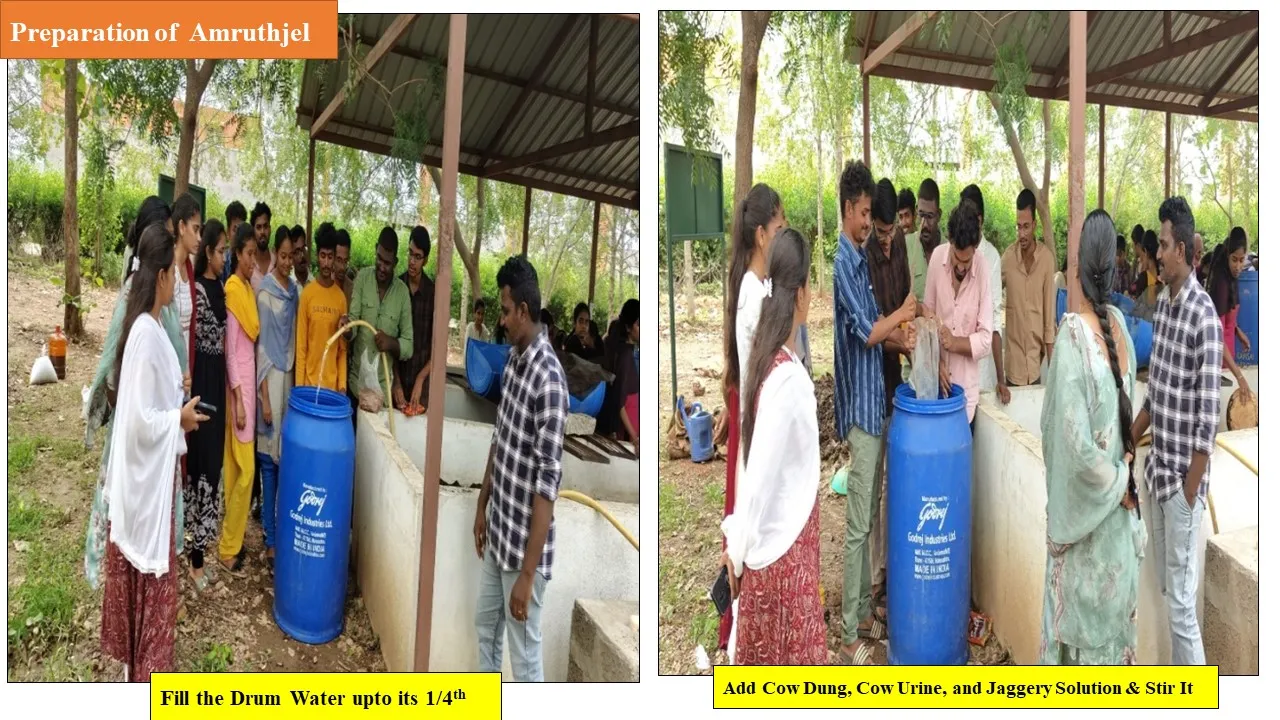
Amruthjel preparation
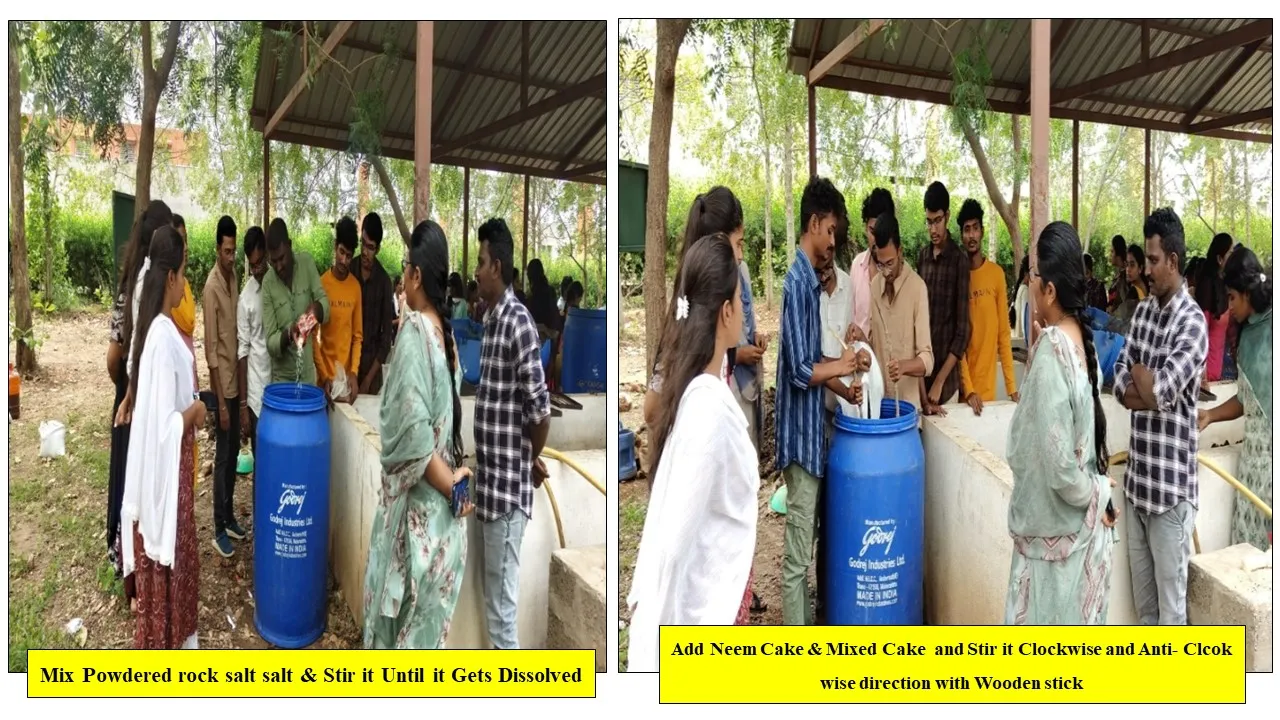
Mixing the amruthjel solution
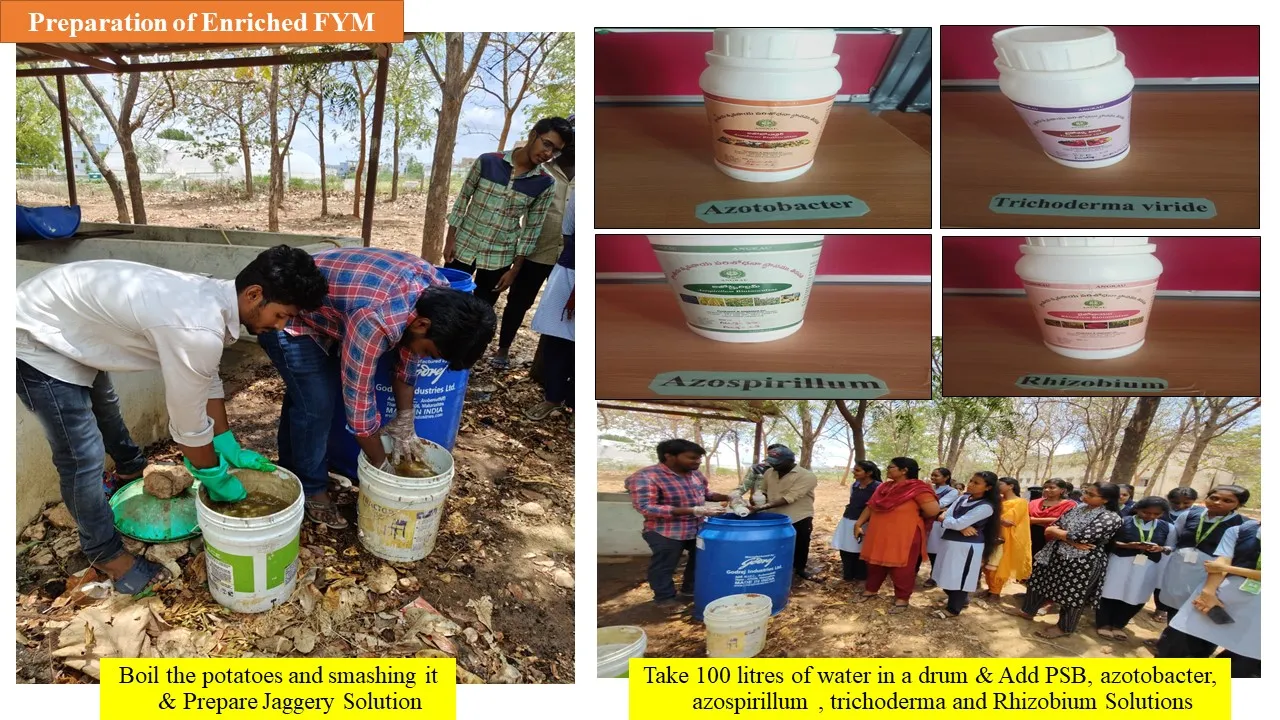
Enriched FYM preparation
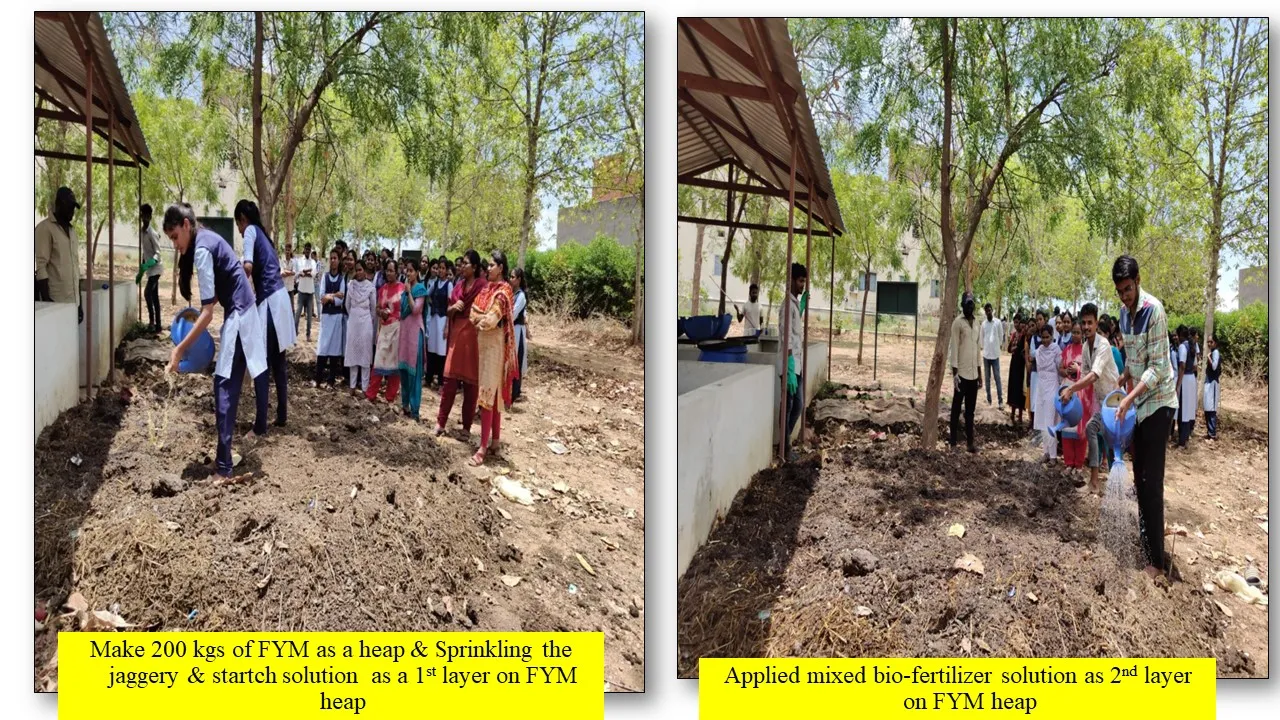
Applying mixed bio-fertiliser solution to the FYM heap
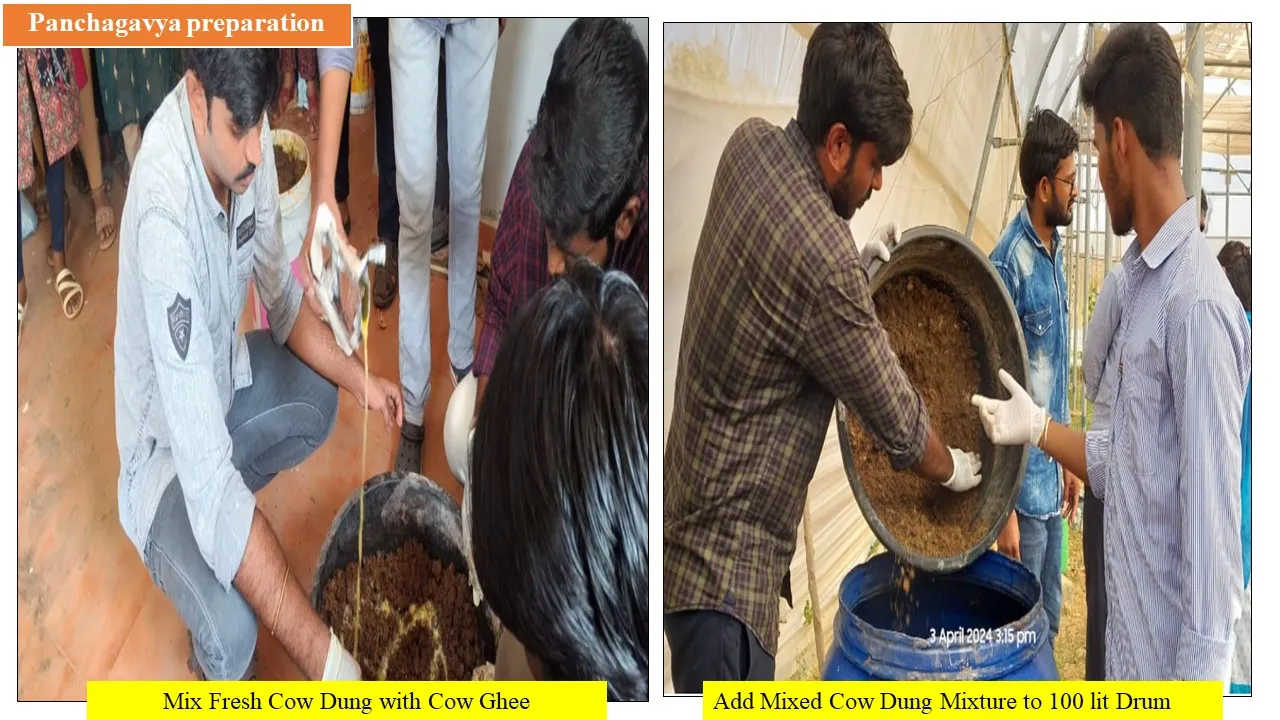
Panchagavya preparation
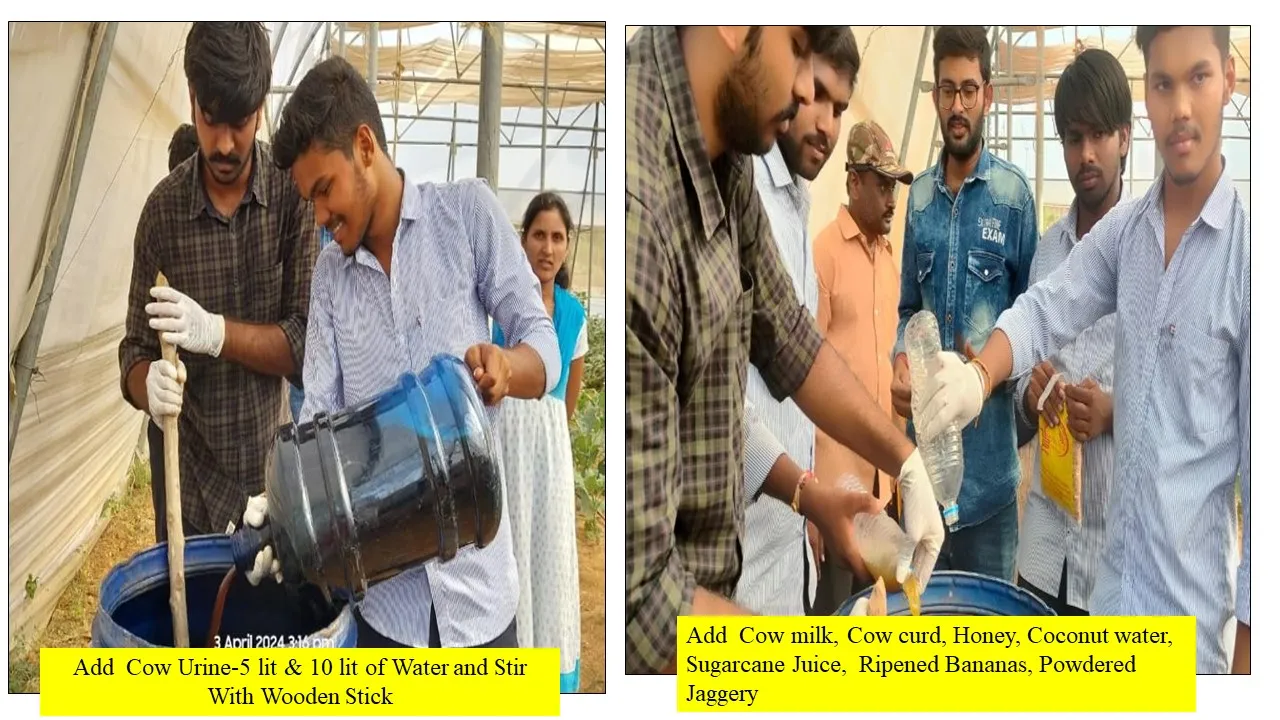
Adding cow urine, water and jaggery to the panchagavya drum
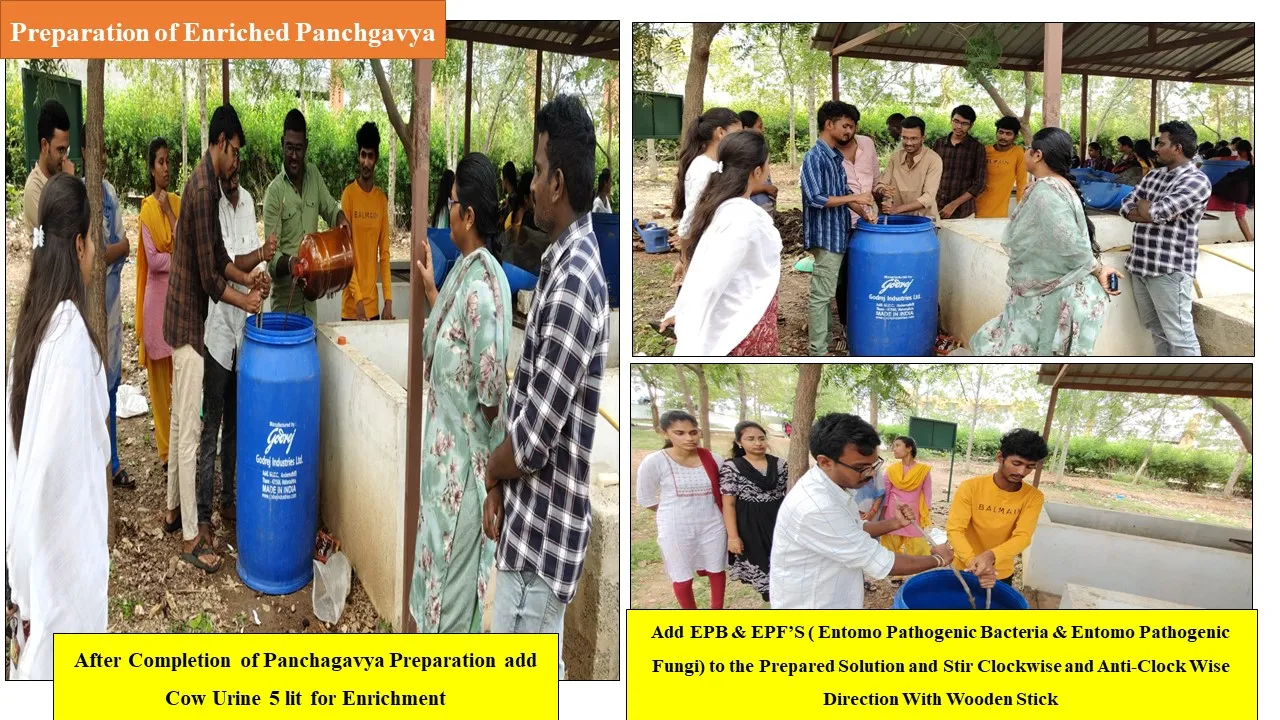
Enriched panchagavya preparation
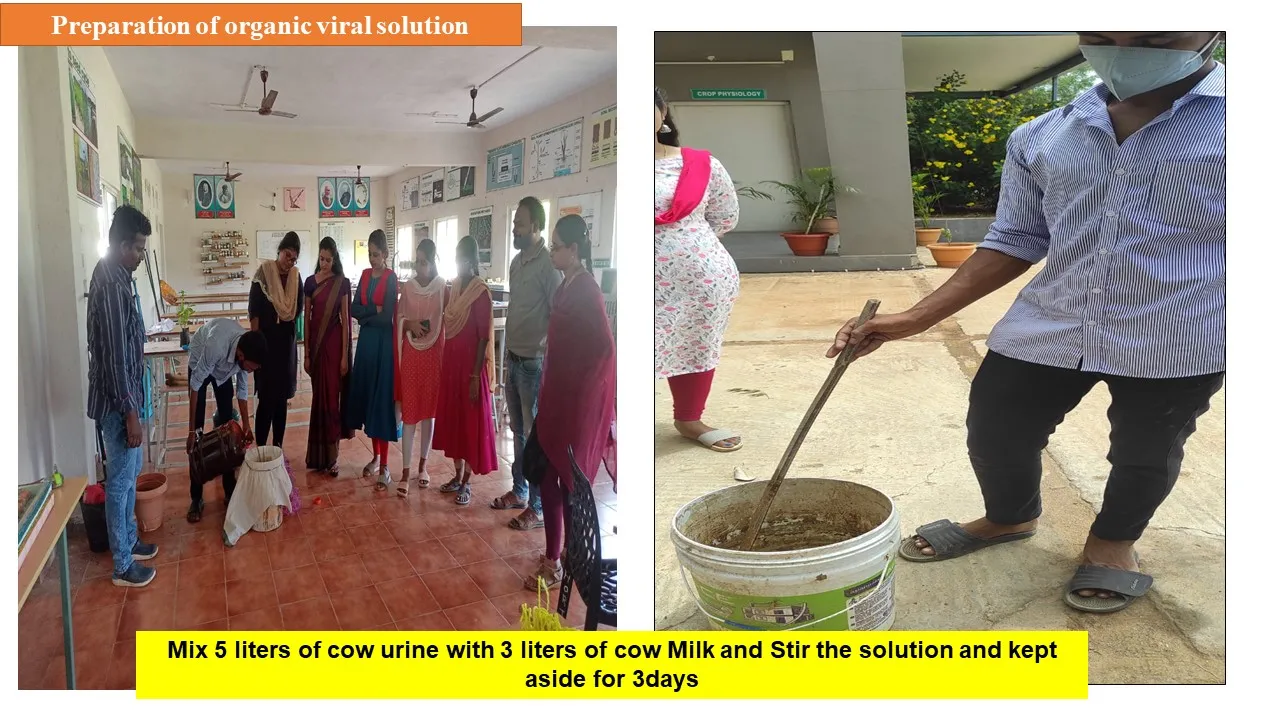
Organic viral solution preparation
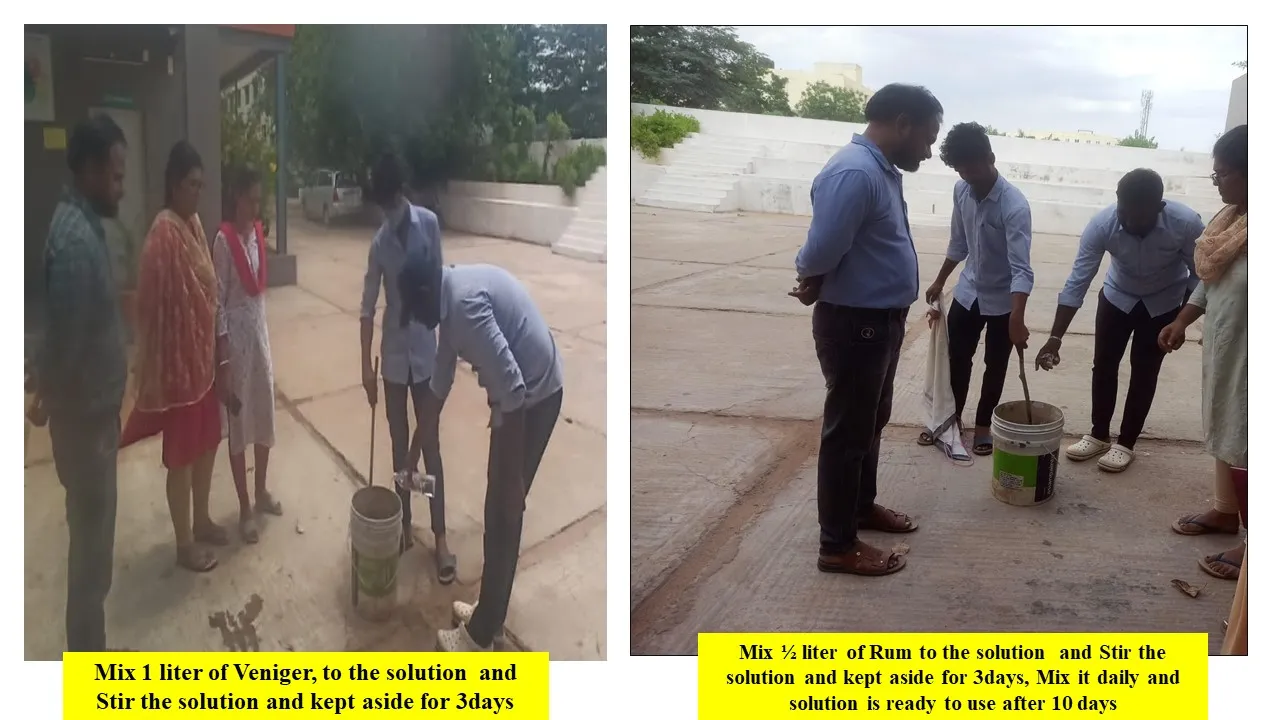
Vinegar solution preparation
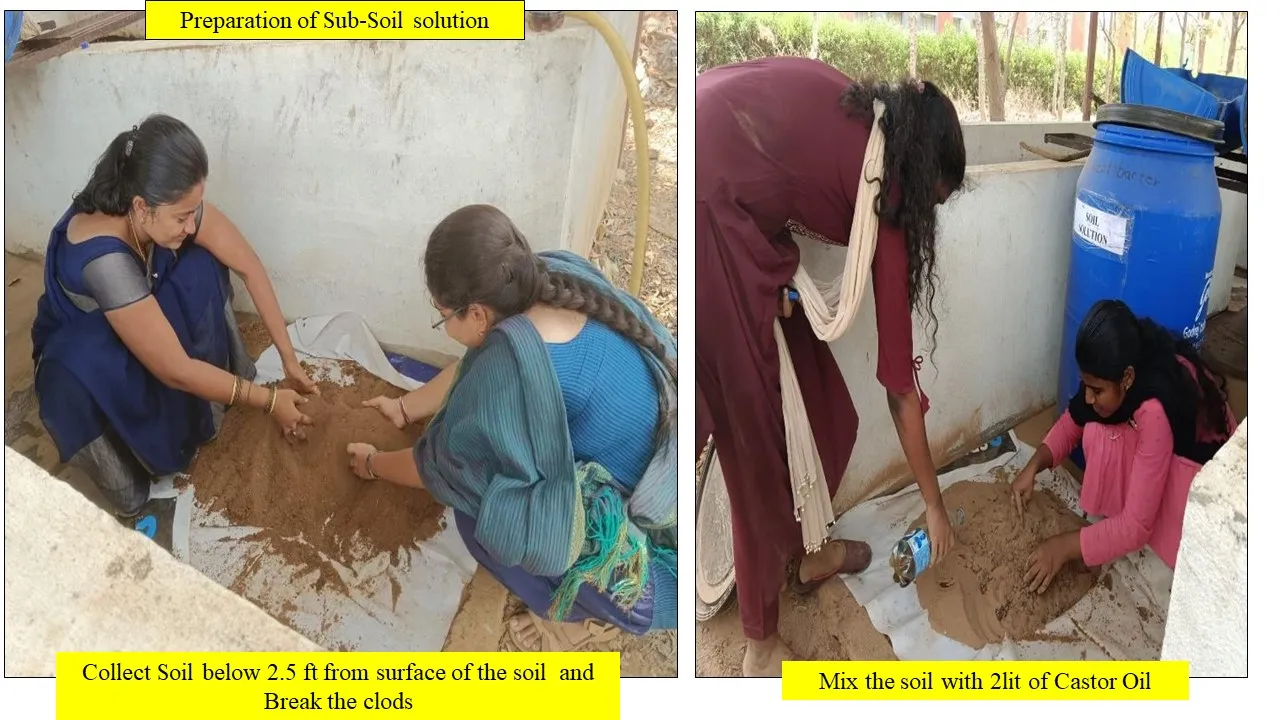
Sub-soil solution preparation
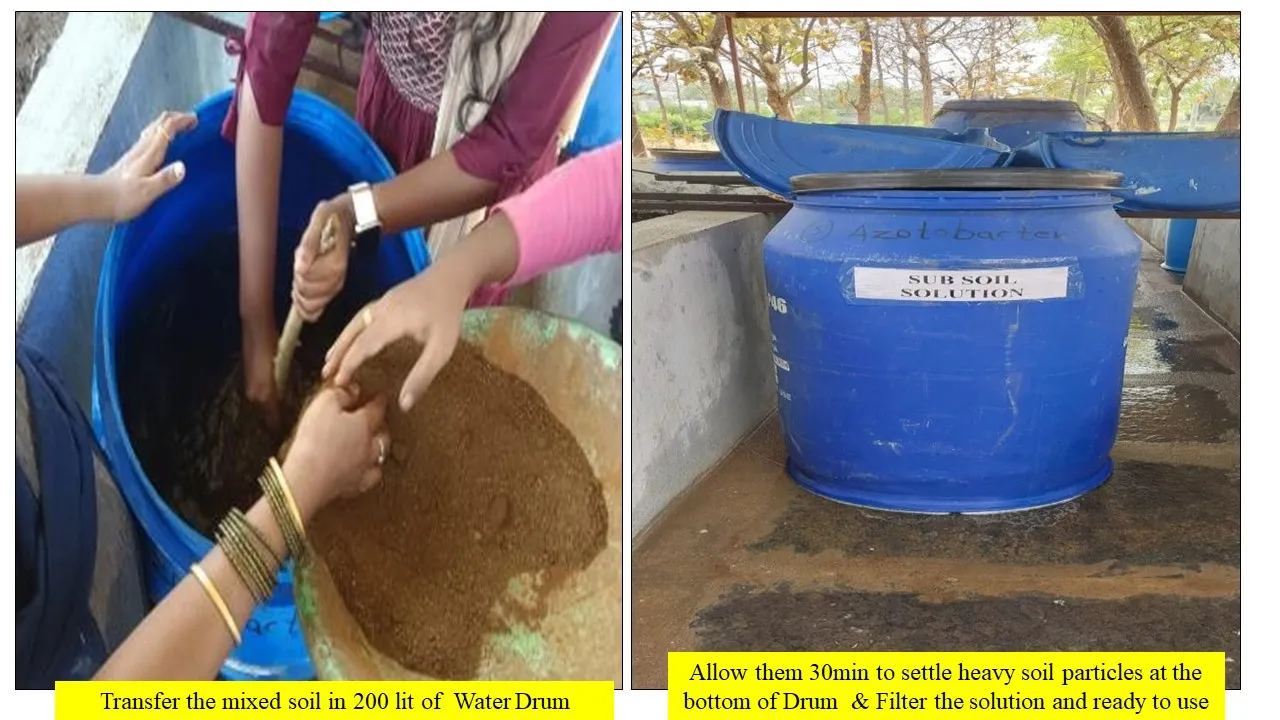
Filtering the sub-soil solution
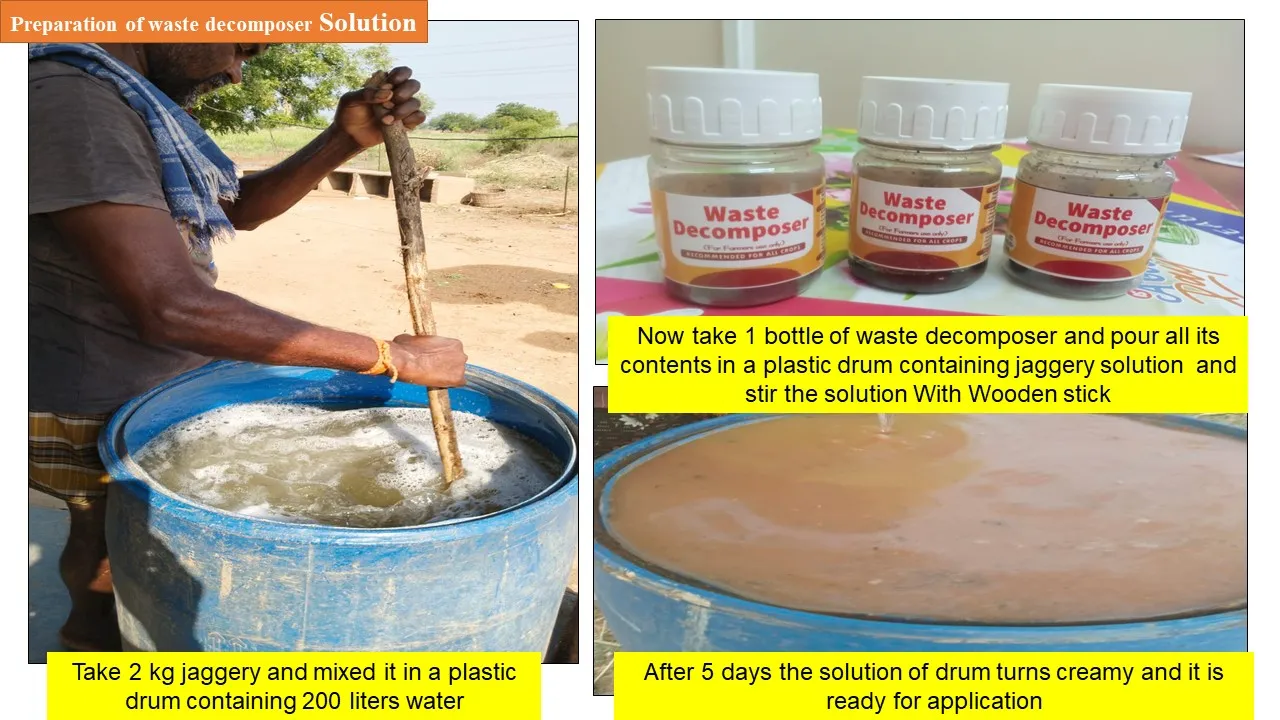
Waste decomposer solution preparation
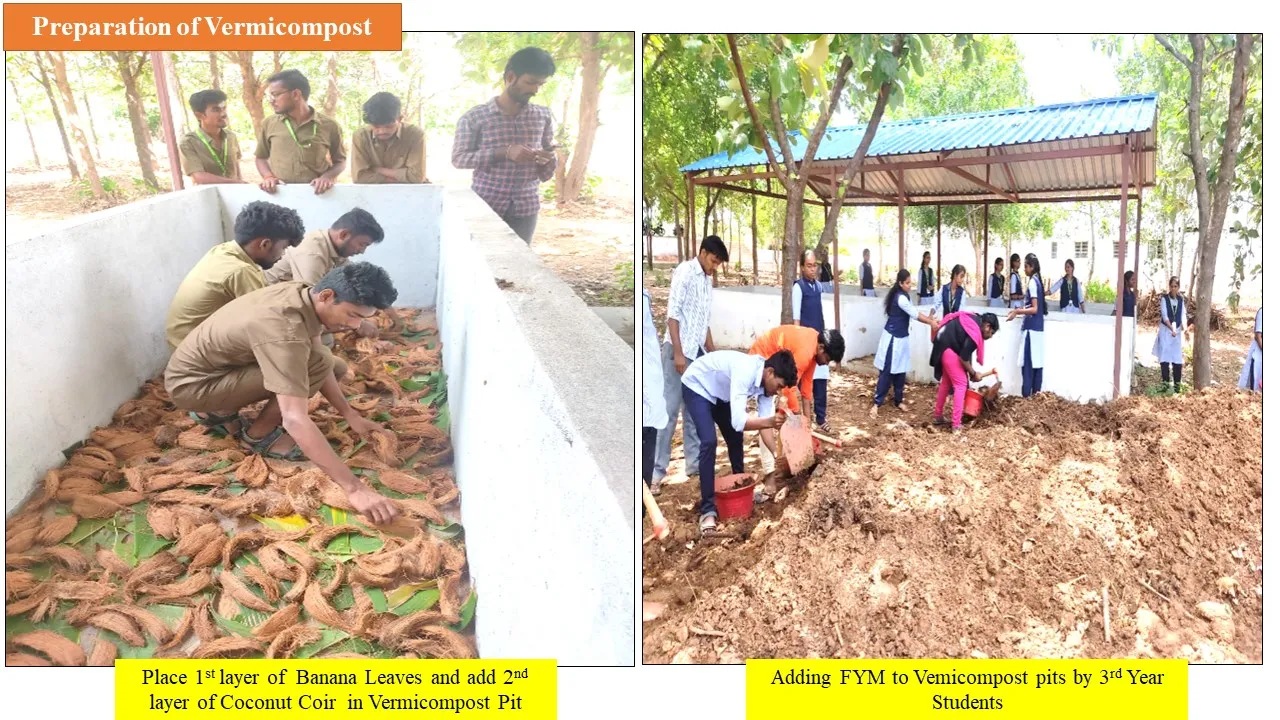
Vermicompost preparation
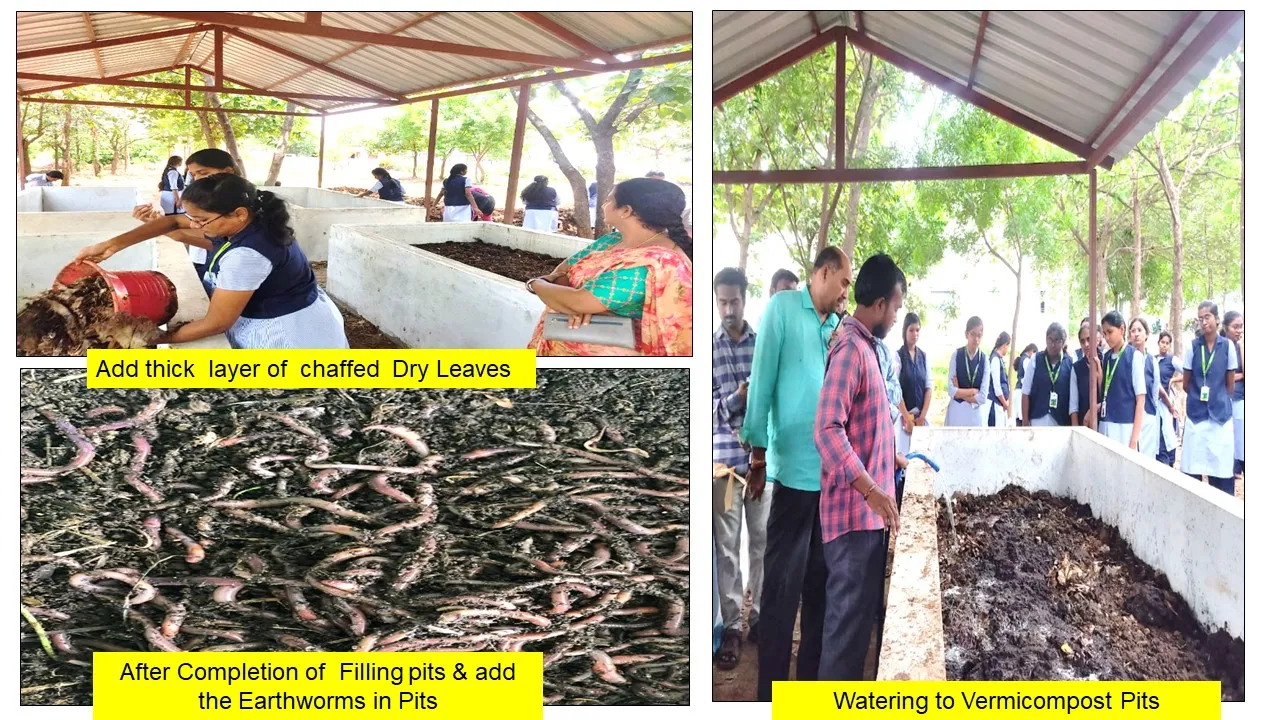
Adding dry leaves and earthworms to the vermicompost pits
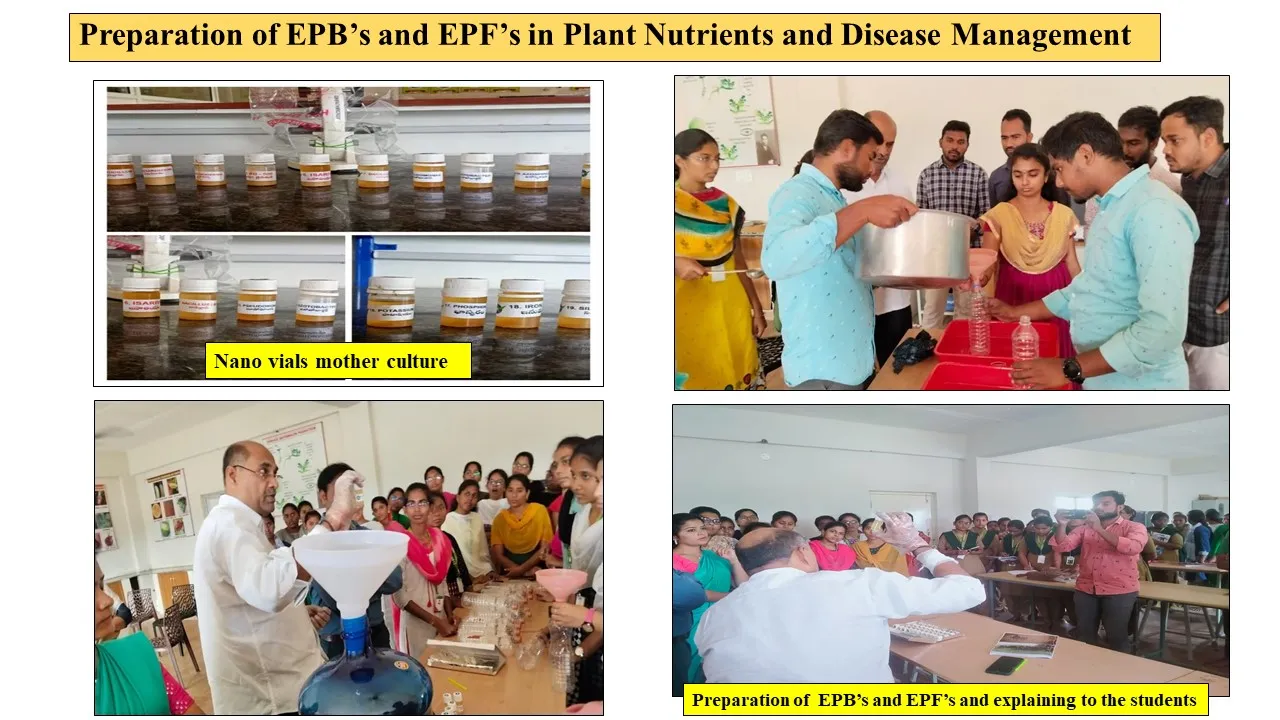
EPB and EPF nano culture preparation, explained to students
Protected cultivation
Poly house
The polyhouse was established in 2022 with a naturally ventilated system. Solanaceous crops, cucurbits, leafy vegetables and leguminous crops are widely cultivated using organic practices, and students are trained in organic cultivation across a variety of crops with high yields.
Tomato, okra, brinjal and chilli are grown on raised beds; cucurbits are grown as creepers in the border rows, staked to the iron poles of the polyhouse. Drip irrigation is installed for precise application. Vermicompost, panchagavya, top-soil solution, amruthgel, vermiwash, rice-soaked water and anti-viral solution are applied weekly.
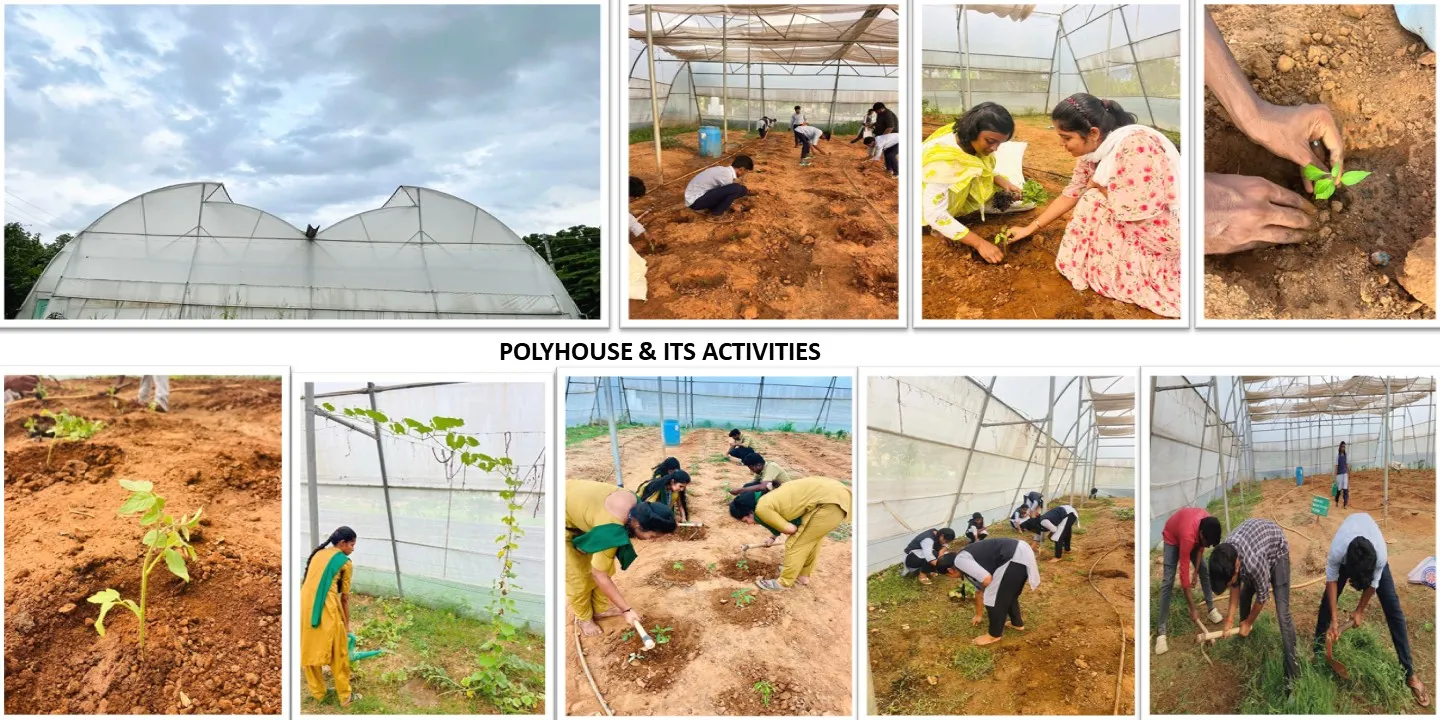
Polyhouse and its activities
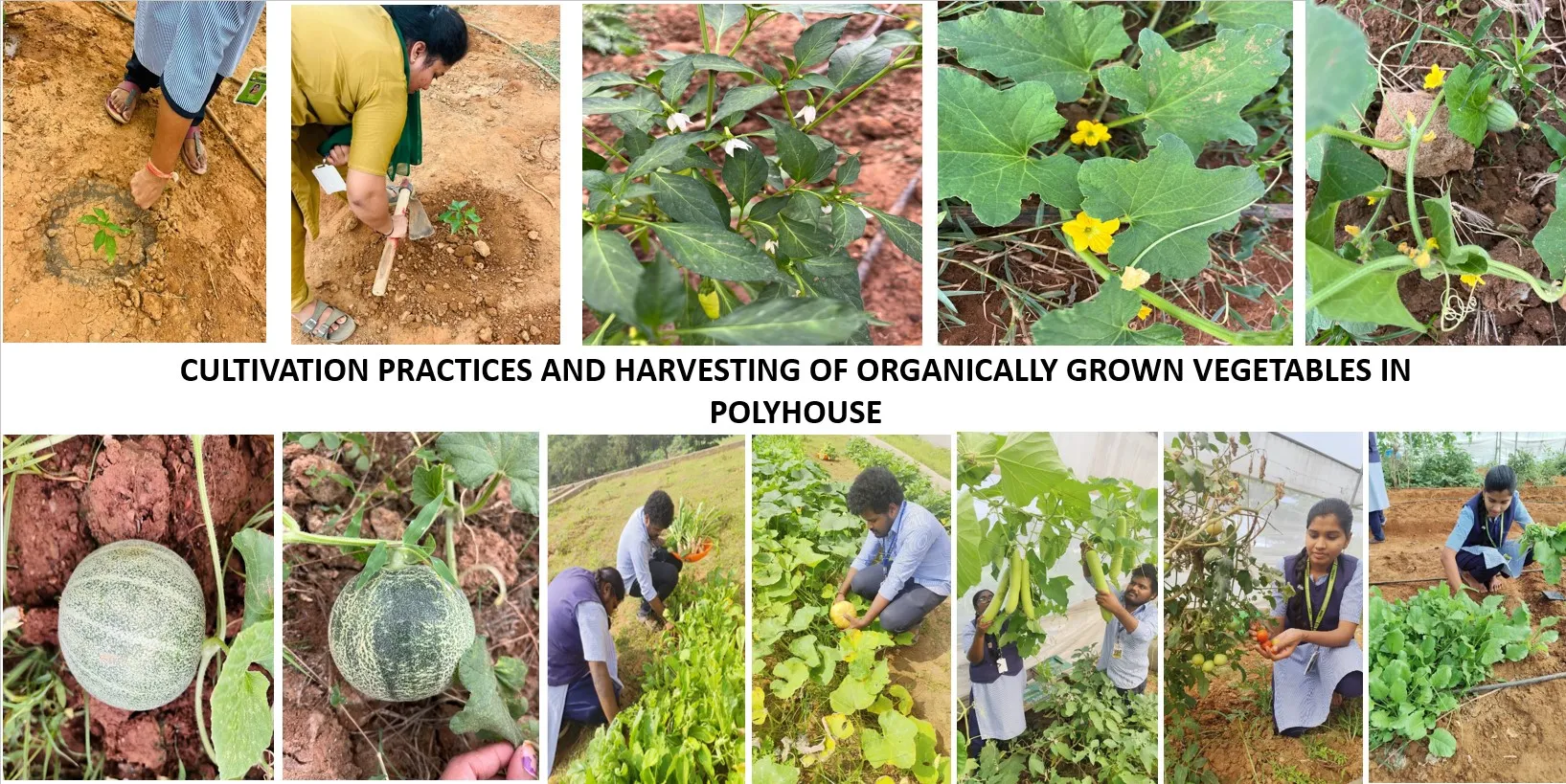
Cultivation and harvesting of organically grown vegetables in the polyhouse
Water
Farm pond
As part of sustainable water conservation practices, a farm pond has been developed at the main farm, designed to harvest rainwater runoff effectively and support multiple farm activities: rain water harvesting, fish farming, and student learning about integrated farming systems, water management techniques and sustainable agriculture.
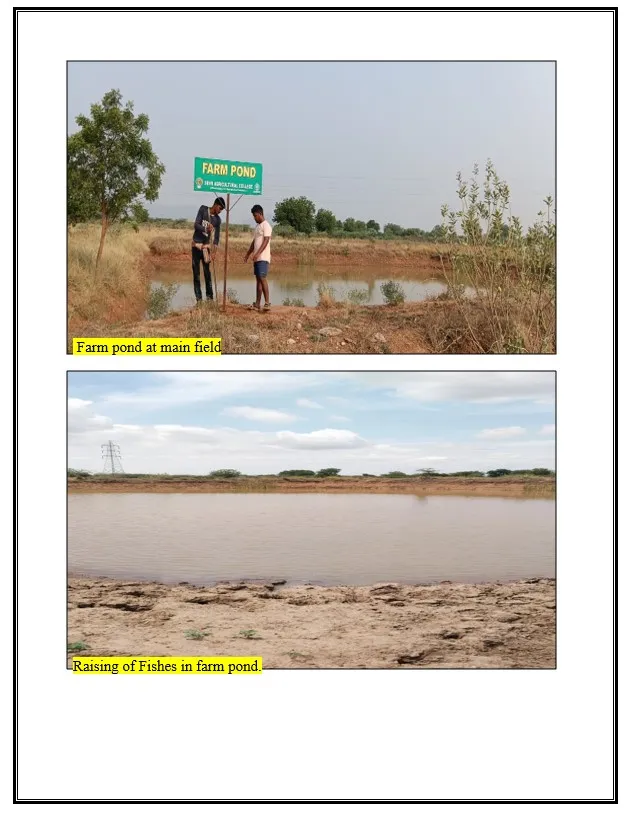
The farm pond after rain
On site
Farm classrooms and supervisor facilities
Specially constructed in-built classrooms are available in the main farm to support practical learning. They are located within the farm premises so that students have easy access to the field and can apply theory immediately. Practical classes are conducted here regularly, giving first-hand experience of the identification, cultivation and management of both field crops and horticultural crops.
A dedicated supervisor store room ensures smooth management and coordination of farm activities. It is a centralised space for storing tools, inputs and safety equipment required for daily operations and practical sessions, and a workspace for the farm supervisor to monitor activities, maintain records and manage labour and resource allocation.
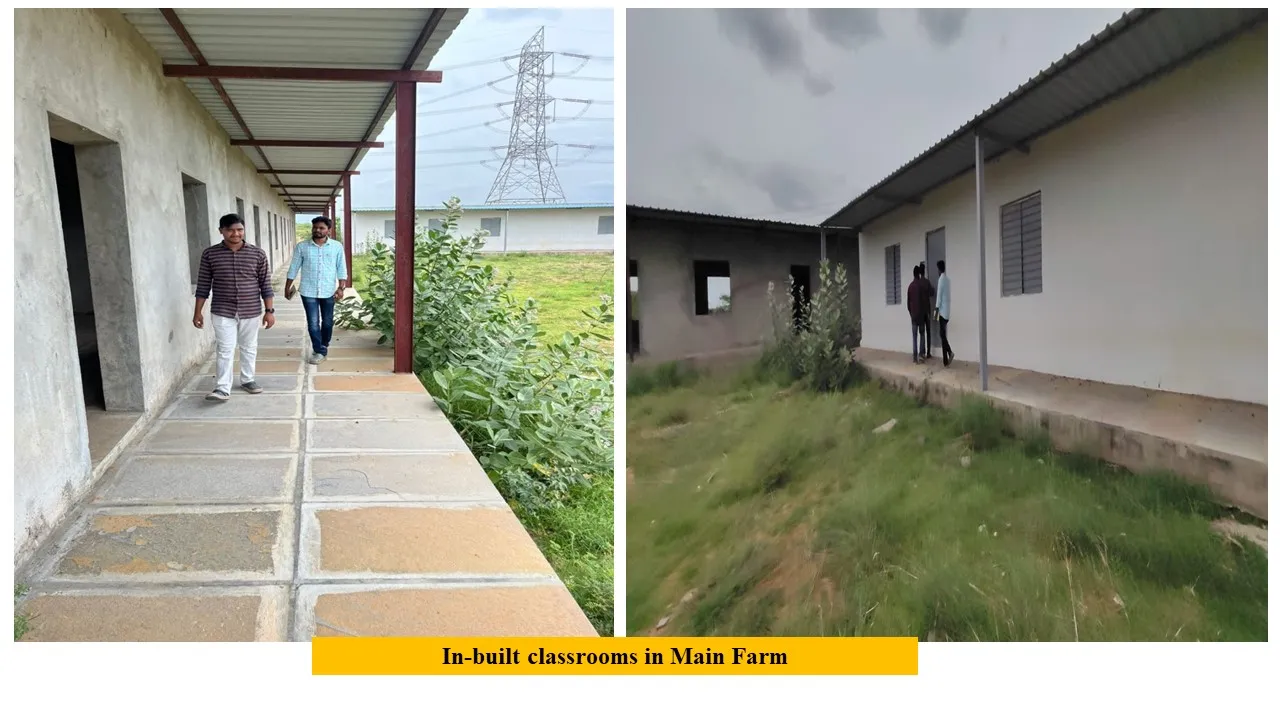
In-built classrooms at the main farm
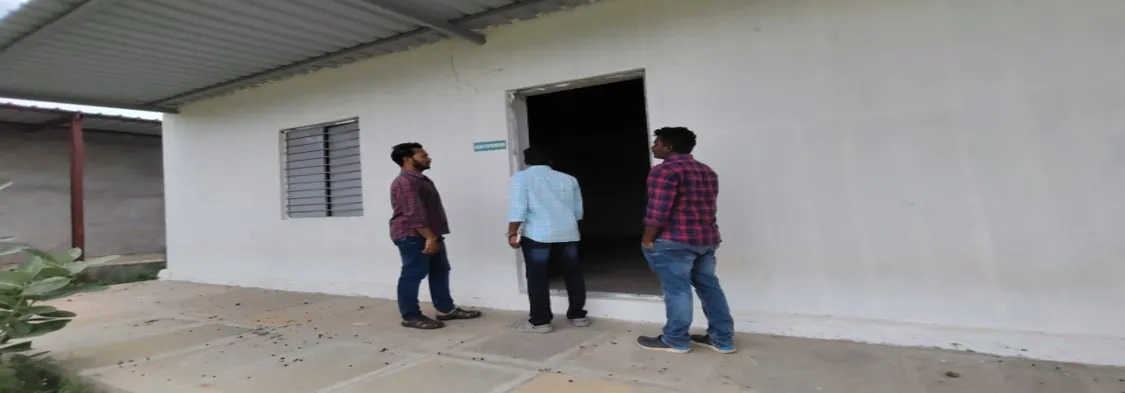
The supervisor store room